Quick Summary
A Yard Management System for manufacturing gives plants visibility and control over every truck between gate-in and gate-out. This guide explains where in-plant dwell time actually accumulates, how gate access control, in-plant vehicle tracking and bay control work together, where the technology falls short, and what to check before deploying one.
Introduction
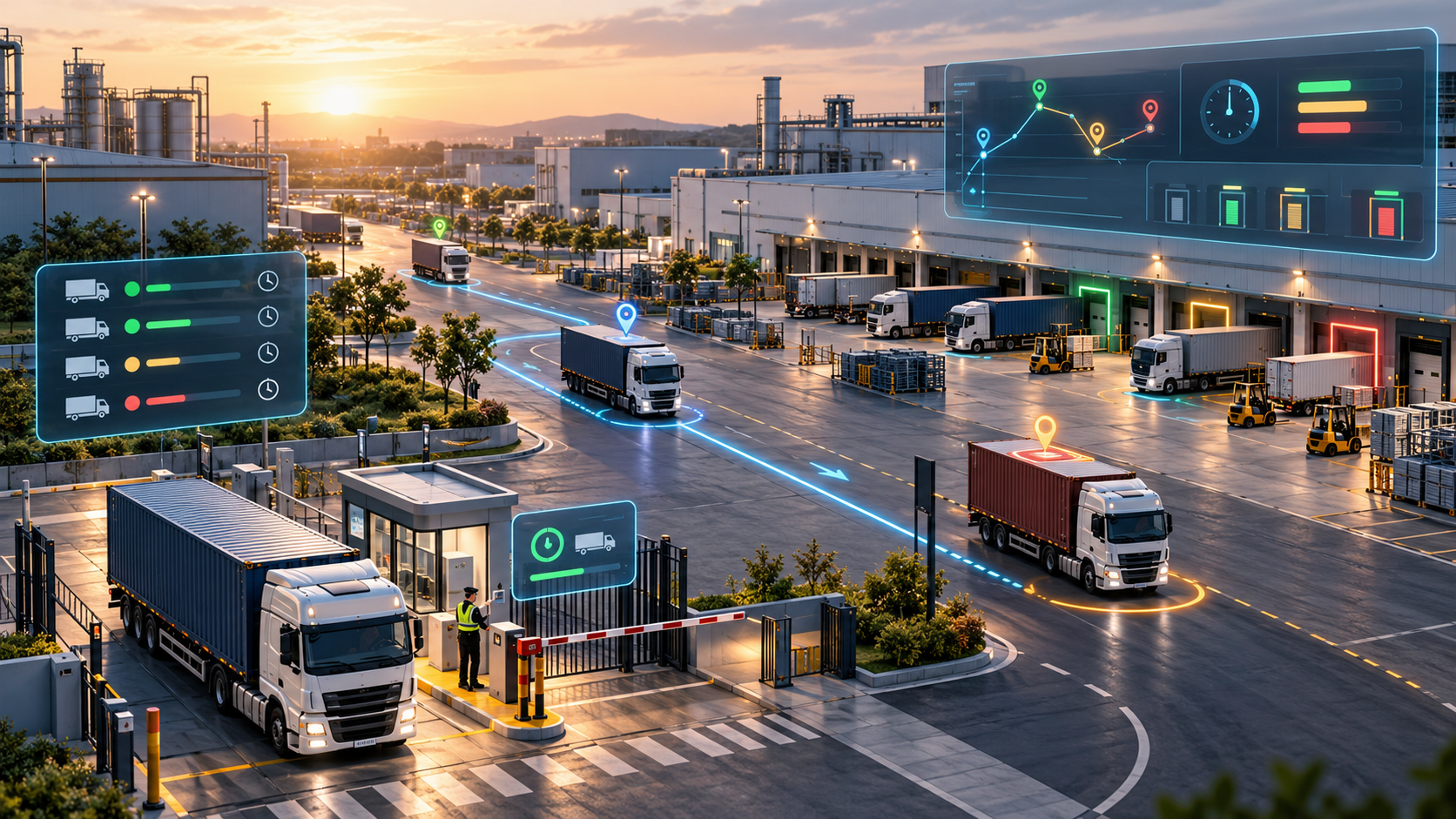
Ask a dispatch manager at a steel or cement plant how long trucks spend inside the boundary, and you will usually get one number: gate-in to gate-out, pulled from the ERP. Ask where that time goes, and the answer gets vague.
The gate register shows entry. The weighbridge slips show two weighments. Everything between them sits in a blind spot: the wait in the holding area, the hour at a bay that wasn't ready, the truck that weighed in and parked behind a shed.
That blind spot is where most turnaround time is lost, and it is the problem a Yard Management System is built to solve. In many plants the real constraint isn't the weighbridge or the loader. It's that nobody can see the queue, so nobody can manage it.
This article looks at yard management from the plant floor: how in plant logistics actually flow, and what a yard management system for manufacturing needs to track and control.
What a Yard Management System Does in a Manufacturing Plant
A Yard Management System (YMS) is software, plus the sensing layer behind it, that tracks and controls vehicles from arrival to departure. In warehousing, the term usually means trailer moves and dock appointments.
Manufacturing yards work differently. A steel or cement plant handles inbound raw material (coal, iron ore, limestone, scrap), outbound finished goods and contractor vehicles, often through one gate. Trucks are driver-attached, most loads are weighed twice, and loading points range from silo packers to open stockpiles.
So a yard management system for manufacturing must also:
- Tie each vehicle to a document (purchase order, delivery order or transit pass) before it enters.
- Sequence weighbridge visits for tare and gross weight.
- Route trucks to material-specific loading or unloading points, not interchangeable dock doors.
- Record exceptions: a wrong zone, excess idling, a truck that weighed in but never reached a bay.
It is a control system for in plant logistics, not a parking-lot map, which is why plants often evaluate it as part of a broader truck turnaround time management system.
Where Truck Time Actually Goes: Breaking Down Dwell Time
Truck turnaround time (TAT) is usually calculated as gate-out minus gate-in. That works for a monthly report but not for fixing anything, because it collapses seven different waits into one figure.
A typical outbound cycle looks like this:
- Pre-gate queue: the truck waits outside the boundary, often on a public road.
- Gate processing: vehicle, driver and documents are checked and entry is recorded.
- Internal holding: the truck waits for a call to the weighbridge or bay.
- Tare weighment: empty weight is captured.
- Bay wait and loading: the truck waits for its loading point, then loads.
- Gross weighment: loaded weight is captured and checked against the order.
- Dispatch and exit: invoice, transit pass and gate pass are issued.
Dwell time is the stationary time inside this chain. The useful question is not "what is our average TAT?" but "which segment is long, and why?"
The answers are often unexpected. A plant blaming its weighbridge may find trucks actually queue at the bay, because they are released faster than loaders can serve them. Without stage-level timestamps, each department defends its own number and the argument never ends.
The Three Building Blocks: Gate, Tracking and Bay Control
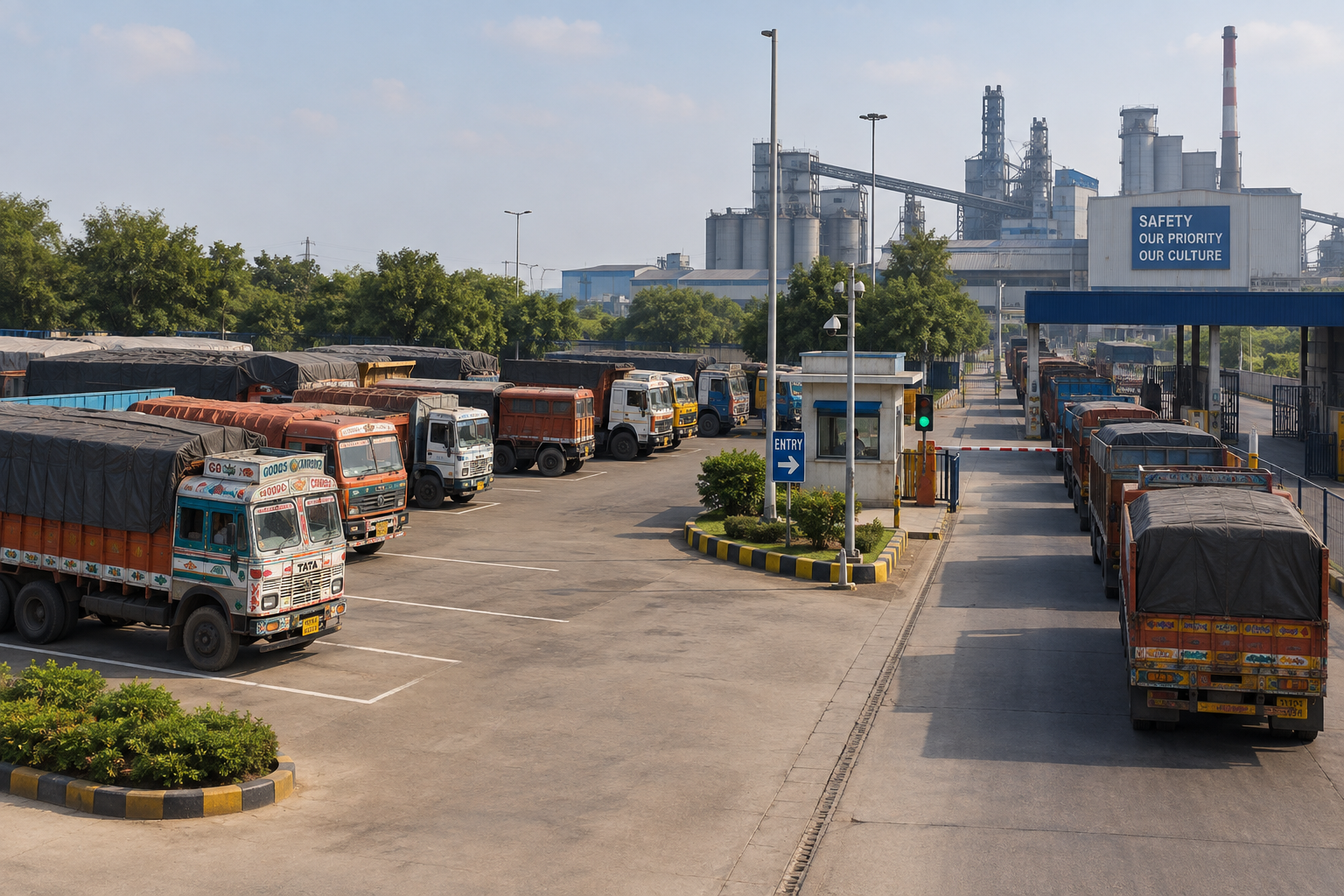
Gate Access Control System
The gate decides the yard's data quality: a wrong identity here attaches every later timestamp to the wrong truck.
A modern Gate Access Control System combines ANPR (automatic number plate recognition) cameras, RFID or FASTag reading and driver verification, with vehicle and licence details checked against Vahan and Sarathi in India. The boom barrier opens only when truck, driver and document match an expected visit.
ANPR has limits. Dirty, damaged or non-standard plates, heavy dust and poor night lighting all reduce read rates. Most plants pair it with RFID and keep a supervised exception lane.
In-Plant Vehicle Tracking
In-Plant Vehicle Tracking answers what the gate cannot: where is the truck now, and how long has it been there? There are three common approaches:
- RFID checkpoints at the gate, weighbridge and bay entry. Reliable and inexpensive, but blind to what happens between readers.
- GPS devices on vehicles. Useful for owned fleets, impractical for third-party transporters who rotate trucks daily.
- Camera-based tracking, which identifies and follows vehicles across zones. No device is needed on the truck and it can detect idling and zone violations, but it depends on coverage and lighting.
For transporter-heavy plants, device-free methods usually make more sense.
Bay Control and Queue Sequencing
Bay control decides which truck moves next and where it goes. In a plant it is closer to traffic management than dock scheduling: release trucks only when the weighbridge and bay can absorb them.
Good sequencing weighs material type, bay availability, order priority and yard density. Strict first-come-first-served looks fair but often leaves one bay overloaded while another sits idle.
Manual vs Automated Yard Operations
The real question is how much of your yard process depends on a guard's register and a supervisor's phone.
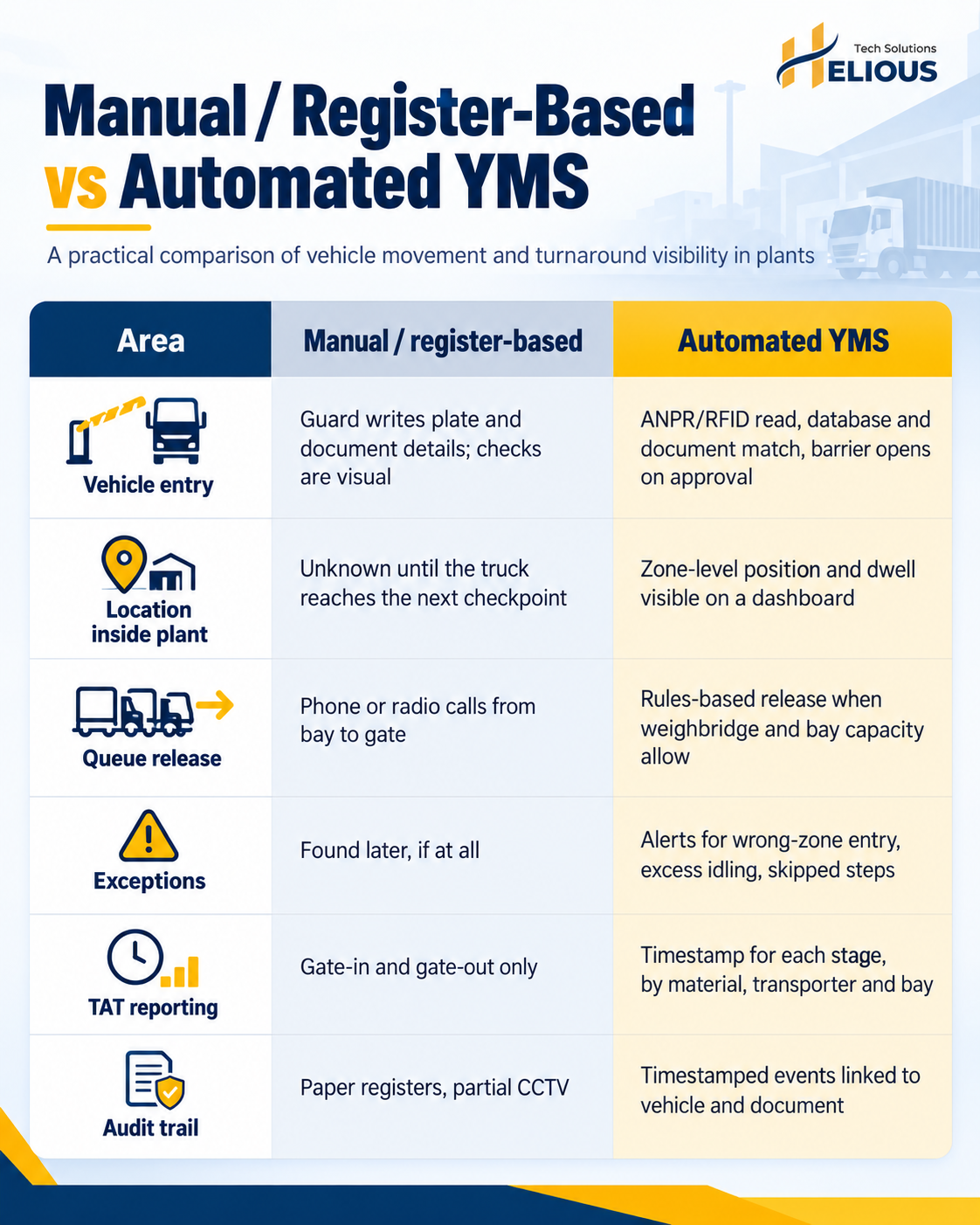
The biggest difference is not speed. It is that problems become visible while they are happening, rather than in a weekly review.
Limitations and Implementation Realities
A yard management system does not create loading capacity. With two packers and demand for four, sequencing reduces chaos and idle fuel burn, but trucks still wait.
Other realities worth planning for:
- Integration is the long pole. The YMS needs order and delivery data from the ERP (SAP, Oracle or a local system) and must write weighment and dispatch data back. Inconsistent master data surfaces immediately.
- Coverage gaps defeat tracking. Blind spots between zones make trucks "disappear" for an hour, so survey every route, not just the gate.
- Exceptions need owners. Decide who responds to an idling truck or mismatched document before go-live.
- Driver habits change slowly. Drivers keep phoning supervisors until the new process is enforced.
- Privacy rules apply. Facial recognition at the gate collects biometric data, so check your obligations under the DPDP Act. Our primer on facial recognition at factory gates and the DPDP Act covers this in detail.
Measure dwell by stage, fix the longest segment first, then extend.
How Helious TAT Guard Handles Yard Visibility, Dwell Time and Bay Control
Helious Tech Solutions approaches yard management through TAT Guard, its truck logistics application. It treats the chain from queue to gate to weighbridge to yard to dispatch as one record. The automation layer is camera-based, so there are no loop detectors or beam sensors to maintain inside the yard. The modules most relevant to the problems above:
- Smart Queue Management System (SQMS): Scores each inbound vehicle on parameters such as yard density, load type and priority, and releases it to a suitable bay when capacity allows, targeting the bay-wait problem in stage 5.
- Gate Access Control System: Verifies vehicles through FASTag, LPR and RFID against Vahan and Sarathi, drivers through DigiLocker-based facial recognition, and PPE at entry. A mismatch triggers denial, an alert and timestamped footage. These capabilities come from Secure Sight.
- Yard Operations Automation and Monitoring: Provides camera-based in-plant vehicle tracking of position, dwell, movement path and zone compliance. Unauthorised zone entry or excess idling raises an alert, and every movement is timestamped.
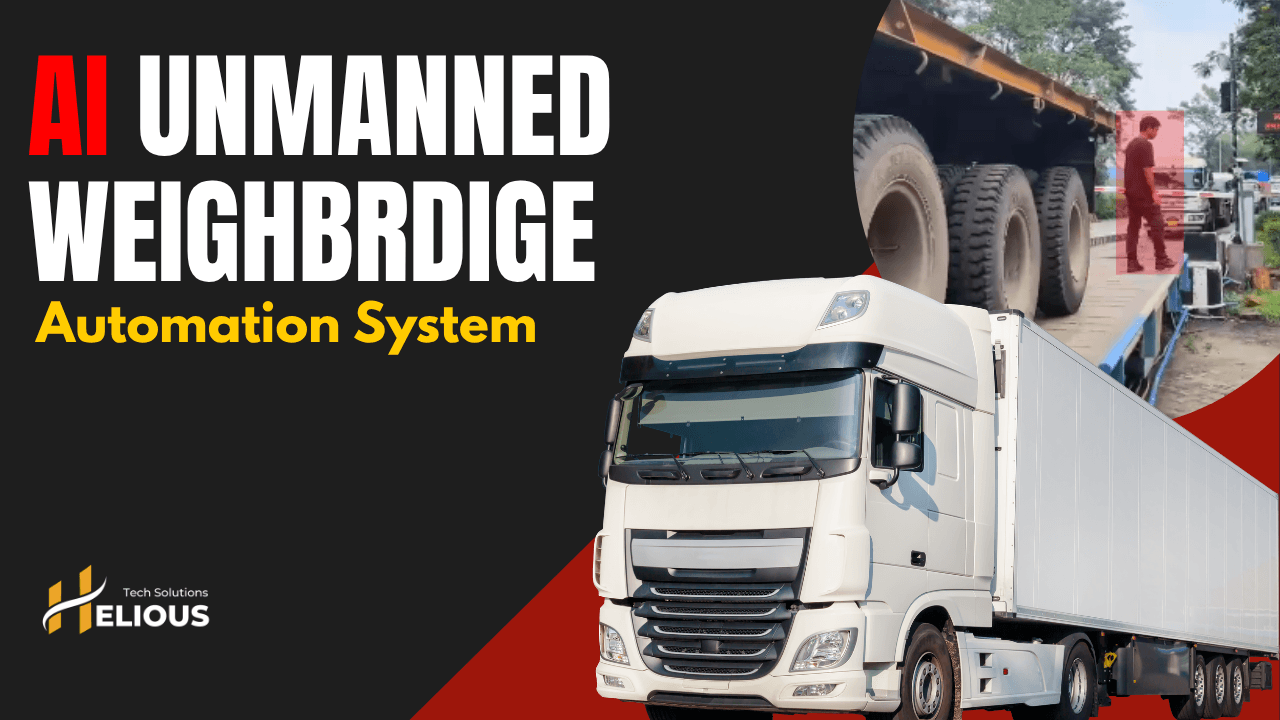
- AI Unmanned Weighbridge Automation: Combines computer vision, FASTag RFID, ANPR, vehicle positioning and zero-weight validation for operator-free weighment, with results passed to the ERP. Plants with existing weighbridges can review how to retrofit an existing weighbridge.
- Dispatch Planning: Allocates trucks against the dispatch plan, sequences them through SQMS, and verifies loading by camera, including AI bag counting for bagged material. Exit uses a digital gate pass with dual authentication and automatic transit pass generation, reconciled in the ERP.
As with any vision system, camera placement and coverage need careful planning during the site survey.
Conclusion
Most plants don't have a turnaround problem so much as a visibility problem. Gate-in to gate-out TAT tells you something is slow; only stage-level dwell data tells you what.
A Yard Management System for manufacturing earns its place when it connects three things: verified identity at the gate, continuous in-plant vehicle tracking, and bay control that releases trucks based on real capacity rather than arrival order. It will not fix a loading bottleneck, and it depends on clean ERP data and clear ownership of exceptions.
Start by measuring where your trucks actually wait; the right first module usually becomes obvious from there.