Quick Summary
In most plants, an existing weighbridge can become fully unmanned without replacing the platform or load cells. This guide explains how to retrofit it with a weighbridge automation system: what to audit first, which automation layers to add, where RFID weighbridge automation falls short, the installation phases to plan for, and how to calculate payback for your site.
The Weighbridge Is Rarely the Problem. The Process Around It Is.

Walk into the weighbridge cabin at most steel, cement, or coal-handling plants and the scene is familiar. The platform weighs accurately, the load cells were calibrated last quarter, and an operator is typing vehicle numbers from a paper challan into software installed a decade ago.
The scale is fine. The weak points are the human steps wrapped around it. Someone reads the plate, someone checks the order, someone judges whether the truck is fully on the deck, and someone presses "capture." Each step adds time to every weighment and opens a window for error or manipulation: a mistyped vehicle number, one axle off the platform, a tare taken while a helper stands on the deck.
That is why many plants have stopped asking whether they need a new weighbridge and started asking whether they can automate the one they have. Usually they can. An automated weighbridge system can be layered onto an existing platform, keeping the load cells and civil structure while taking the operator out of the routine transaction. The rest of this article covers how that retrofit works, how long it takes, and how to judge whether it pays back.
What "Fully Unmanned" Actually Means
A weighbridge with RFID readers and boom barriers is not automatically unmanned. Many sites have both and still keep an operator in the cabin to override readings, fix vehicle numbers, and print slips.
A fully unmanned weighbridge completes the routine transaction with nobody in the cabin and nobody on the deck. The system has to do everything the operator did: identify the vehicle and match it to an open order, confirm the platform reads zero, confirm the truck is correctly positioned, capture a stable weight, verify the load where possible, post the record to ERP and raise an exception when any check fails.
That last point matters most. Unmanned does not mean no human is ever involved. It means people handle exceptions remotely, with evidence, instead of handling every truck by hand.
What the Retrofit Keeps
The platform, load cells, junction box and usually the weight indicator stay in place. The automation layer reads the indicator output and adds identification, cameras, barriers, a driver interface and software. If the indicator is old or has no usable data port, it may need replacing, and any change to the weighing instrument itself should be checked against Legal Metrology verification requirements first.
Step 1: Audit the Existing Weighbridge Before Buying Anything
Most retrofit delays come from problems discovered after the order is placed. A short site audit catches them early.
- Weighing health. Check load cells, junction box and earthing. Automation will faithfully record a drifting scale, so fix calibration issues first.
- Indicator output. Confirm the indicator sends weight over RS-232, RS-485 or Ethernet as a continuous feed. Stable-weight detection depends on it.
- Approach geometry. Is there enough straight run before and after the platform for barriers and a short queue?
- Mounting and lighting. Cameras need poles or gantries with clear views of plates, the deck and the load top, plus consistent lighting for night shifts.
- Power and network. Weighbridges often sit at the edge of the plant network. Plan UPS backup and a reliable link to the server and ERP.
- Process mapping. Document every flow: inbound and outbound, single and double weighment, tare-only trips, rejected loads, and what happens when ERP is down.
Treat process mapping as seriously as the hardware checks. Exception handling is where most unmanned projects succeed or fail.
Step 2: Add the Automation Layers
Think of an automated weighbridge system as a stack. Each layer removes one manual decision the operator used to make.
Vehicle Identification
The truck must be identified without anyone reading a plate. Options include plant-issued RFID tags, FASTag read through a UHF reader, and ANPR cameras. The strongest setups use two independent methods that must agree, so a tag moved between trucks is caught. The verified registration then pulls the open order or gate pass from ERP.
Zero Check and Deck Clearance
Before the barrier opens, the system confirms the indicator has returned to zero and is stable. Spillage, mud or a stored offset shows up here. Deck cameras confirm no person is on the platform, which serves as both a safety interlock and an anti-manipulation control.
Vehicle Positioning and Stable Capture
Weight should only be captured when every axle is inside the platform boundary. Older systems use loop detectors or photocells; camera-based positioning does the same without roadside sensors that trucks damage routinely. The software then waits for the reading to settle within a set band before recording it, replacing the operator's judgement of when to press capture.
Load and Driver Verification
A top-view camera can classify the material against the order and check whether the load is covered. Face matching confirms the assigned driver is at the lane. Neither is foolproof: a camera cannot see a void under a tarpaulin, which is why the image is also kept as evidence for later disputes.
Barriers, Driver Interface and ERP Posting
Boom barriers, signals and a display tell the driver when to enter, stop and leave. The completed record then posts to ERP automatically. Ask every vendor what happens when the network drops: transactions should queue locally and sync later, not stop the weighbridge.
RFID Weighbridge Automation: Where It Works and Where It Falls Short
RFID weighbridge automation is the most common starting point for good reason. UHF reads are fast, work in dust and darkness, and FASTag means most commercial trucks in India already carry a tag.
But an RFID read proves a tag is present, not that the right truck is on the deck. Tags can be moved to another vehicle, held up by hand at the reader, or read from a neighbouring lane. RFID also says nothing about positioning, the load or who is standing on the platform. It works best as one layer, not the whole system.
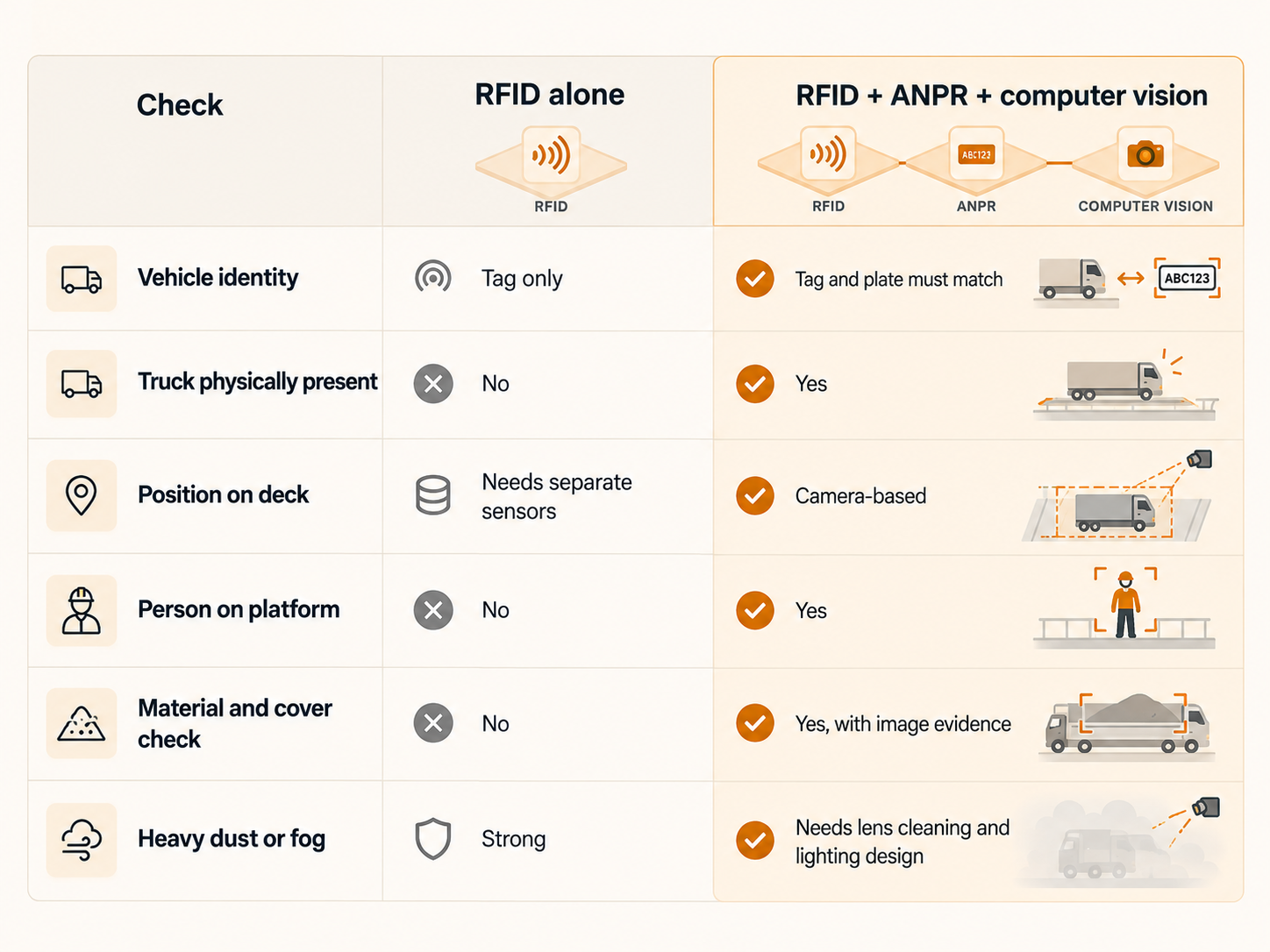
The last row is a genuine trade-off. At coal and cement sites, cameras need a cleaning routine and planned lighting, while RFID keeps reading through conditions that blur a lens.
Installation Timeline: What to Expect Phase by Phase
A retrofit timeline is driven less by hardware than by audit findings, ERP integration, and the parallel run. Mounting cameras and barriers is quick; agreeing how every exception should be handled is not.
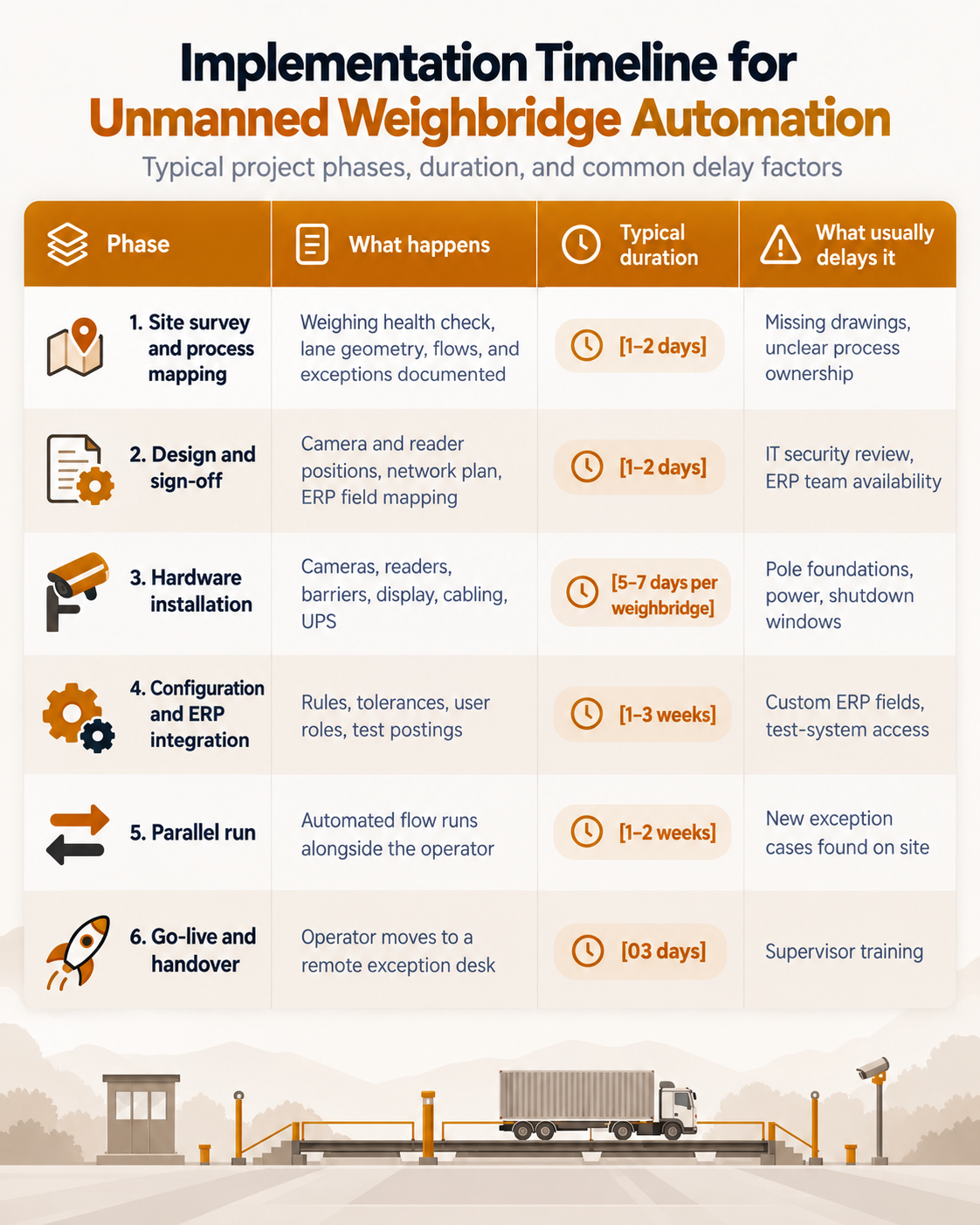
Most of this work can happen while the weighbridge keeps operating, with short shutdowns for barrier and cabling work. Plants with several weighbridges usually automate one first, stabilise it through the parallel run, then roll out the rest faster using the same configuration. Do not cut the parallel run short to hit a date; it is where hidden process gaps surface.
Payback Period: How to Calculate It for Your Site
There is no honest single payback figure for weighbridge automation. It depends on truck volume, shifts, current losses, and how much of the surrounding process you automate.
Net monthly savings usually come from four sources:
- Manpower: operators, clerks, and supervisors per weighbridge across all shifts. In a three-shift operation, this is often more people than you first count.
- Turnaround time: faster weighments shorten queues, cut detention charges and free up fleet hours, especially where trucks wait outside the gate.
- Leakage and fraud: tare manipulation, vehicle swaps and wrong-material dispatches. Use your own reconciliation data, not an industry average.
- Disputes and rework: fewer slip corrections, transporter disputes and manual ERP reconciliation.
Total project cost should include hardware, software, civil work, integration, training and annual maintenance, not just the equipment quote. Leakage savings are the hardest to estimate and the easiest to exaggerate, so build the case on manpower and turnaround first and treat leakage reduction as upside you verify after go-live.
To model this with your plant's figures, use the Helious TAT Guard ROI Calculator. It takes your operating inputs and generates a downloadable PDF report showing estimated annual savings and payback period, which you can share directly with finance and leadership.
Choosing a Weighbridge Automation Company in India
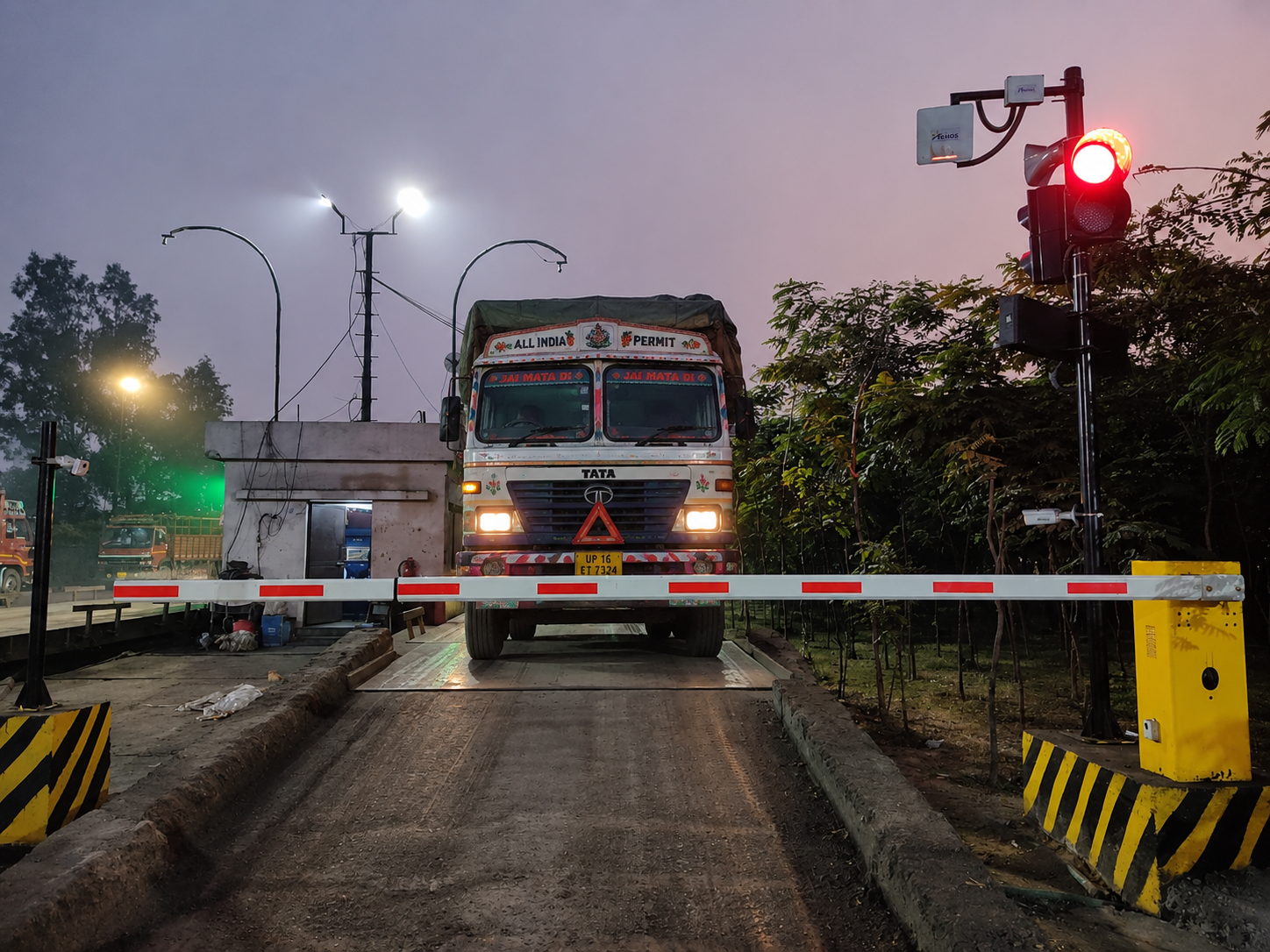
In a retrofit, the vendor matters more than in a new installation because the system must work with equipment someone else supplied. When shortlisting a weighbridge automation company in India, ask:
- Does the system work with any weighbridge brand and indicator, or only its own?
- Is identification RFID-only, or cross-checked with ANPR and vision?
- When a check fails, who is alerted, and with what evidence?
- Which ERP systems has it been integrated with, and how does it behave offline?
- Can it extend later to gate access, queue management, and dispatch, or is it a standalone box?
Ask to see an exception handled live, not only a clean weighment. A demo where everything goes right tells you very little.
How Helious AI-Unmanned Weighbridge Automation Handles the Retrofit
Helious Tech Solutions built its AI-Unmanned Weighbridge Automation System for exactly this situation. The load cells you already own remain the scale, and a camera-native automation layer sits on top of any weighbridge brand. It runs as a module of TAT Guard, the Helious truck turnaround time and theft prevention & plant logistics management system. The features most relevant to a retrofit:
- FASTag and ANPR cross-check: the RFID reader reads the FASTag while ANPR reads the plate independently. Both must resolve to the same vehicle before the ERP order is pulled, closing the tag-swap gap.
- Vehicle presence check: computer vision confirms a real truck of the right class is at the barrier before the RFID read is accepted, so a hand-held tag fails.
- Zero weight validation: the platform must return to zero and hold within tolerance before entry; otherwise the lane locks and the supervisor gets an alert with a deck image.
- No-person-on-deck detection: deck cameras confirm the platform is clear, acting as a safety interlock and protecting tare readings.
- Camera-based positioning: AI confirms every axle is within the platform boundary, with no loop coils or photocells to maintain.
- Driver face recognition with DigiLocker verification: matches the driver to the consignment and validates the licence.
- Top-view material identification: classifies the load against the ERP order, checks it is covered, and keeps the image for shortage claims.
- ERP integration with offline queueing: weight, vehicle, driver, material, images and timestamps post to ERP; if the link drops, transactions queue locally and replay.
Helious states a weighment cycle of around 45 seconds from wheels-on to boom-up. Because the weighbridge sits inside TAT Guard, the same platform can later extend to gate access control and smart queue management, so the weighbridge is not automated in isolation from the gate and yard.
Conclusion
Retrofitting an existing weighbridge into a fully unmanned one is mainly a process project, not a civil one. The platform and load cells usually stay. What changes is everything around them: identification, zero and position checks, stable capture, load verification, ERP posting and, above all, exception handling.
Start with an honest audit, automate one weighbridge first, and run it in parallel until the exceptions are understood. Calculate payback from your own manpower and turnaround figures before counting leakage savings. Done that way, the decision rests on your plant's numbers rather than assumptions.