Quick Summary
A facial recognition access control system at a plant gate processes biometric data of employees, contractors, visitors and truck drivers. This primer explains where the DPDP Act stands in 2026, when obligations actually apply, whose data needs consent and whose data falls under employment-related legitimate use, and how to design gate automation that stays fast and defensible.
Introduction

It is 6 a.m. at the main gate of an integrated steel plant. Several hundred workers, many on contract, cross the turnstiles at shift change while trucks queue outside, each driver waiting to be matched to a vehicle, a gate pass and a licence.
Plants that replaced the paper register and the guard's visual check with a facial recognition access control system solved real problems: proxy entries, borrowed passes, and drivers swapped between gate-in and weighment. They also became custodians of biometric data for thousands of people, most of whom are not on their payroll.
That second fact is what the Digital Personal Data Protection Act, 2023 cares about. Most plant teams know DPDP compliance is "coming." Fewer know what applies today, what applies from May 2027, and what their gate automation system has to change before then.
Where the DPDP Act Actually Stands in Late 2026
The DPDP Rules, 2025 were notified on 13 November 2025 and commence in three stages: Data Protection Board provisions immediately, consent manager registration from November 2026, and the substantive duties on data fiduciaries (notice, consent, security safeguards, breach intimation, retention and data principal rights) from 13 May 2027.
That does not leave gate biometrics unregulated until then. The SPDI Rules, 2011 under the IT Act continue to apply during the transition, and they already treat biometric information as sensitive personal data requiring written consent before collection. A plant running face-based entry without documented consent is not in a grace period.
The date may also move. In January 2026, MeitY consulted industry on shortening the 18-month window, mainly for Significant Data Fiduciaries. No amendment had been notified at the time of writing, so plan for May 2027 and aim to be ready earlier.
Why Plant Gates Are Harder Than Office Attendance

Four populations, four legal positions
An office system mostly enrols employees. A plant gate enrols at least four groups, and the DPDP Act treats them differently:
- Permanent employees: Section 7 allows processing without consent for employment purposes and for safeguarding the employer from loss or liability. Access control and site security fit here.
- Contract workers: Engaged through a labour contractor, so the employment ground is less certain. Many legal teams will prefer consent.
- Visitors: Consent at registration is the natural basis.
- Truck drivers: They work for transporters, not for you. Consent is the basis, and this is where it gets uncomfortable.
The free-consent problem
DPDP consent has to be free, specific, informed, unconditional and unambiguous, and withdrawal must be as easy as giving it. A driver told "enrol your face or your truck doesn't unload" has arguably not consented freely.
The practical answer is a fallback route, such as an OTP plus document check or an RFID card, for anyone who declines or withdraws. Treat it as a design requirement, and log fallback entries as rigorously as face matches.
What a Compliant Gate Setup Needs
Notice at the point of enrolment
State what is captured (face image, template, entry and exit timestamps), why (access control, safety compliance, identity checks at the weighbridge), how to withdraw, and whom to complain to. For drivers, publish it in Hindi and the regional language, not only English.
Purpose limitation
The real risk is function creep: gate data drifting into productivity monitoring, wage disputes or reports shared with transporters. Fix the purpose list before go-live and have the access management system enforce it through role-based access.
Retention and erasure
Personal data must be erased once its purpose is served. A visitor's template has no reason to outlive the visit by months; a driver should go when the transporter relationship ends. The Rules, however, require logs needed to investigate unauthorised access to be kept for at least a year, so separate the biometric template from the access log.
Security safeguards and vendors
Encryption, restricted admin access, monitoring and periodic security testing are baseline. Your vendor is usually a data processor, but the plant remains the data fiduciary and carries the liability. Penalty ceilings under the Act reach ₹250 crore for inadequate security safeguards and ₹200 crore for failing to report a breach.
Technical limits that become compliance issues
Helmets, masks, dust, low sun and night lighting raise false rejection rates, and a system without liveness detection can be fooled by a photograph. A false reject becomes a queue; a false accept becomes a security incident. Accuracy is also a legal duty: where personal data drives decisions about people, the Act requires it to be complete, accurate and consistent.
Compliance and Throughput Are Not Opposites
DPDP is often treated as friction on plant gate automation, but the controls overlap. A gate that links driver face match, number plate reading and RFID in one transaction removes manual checks, which is why identity verification sits inside most truck TAT reduction software. The same checkpoint can enforce PPE and induction status, making the gate a point of safety compliance management, not just security.
What DPDP adds is discipline over the record: who was captured, on what basis, for how long, and who viewed it. An AI access management system that produces one auditable record per entry handles that far better than a paper register.
How Helious TAT Guard and Secure Sight Handle Gate Identity
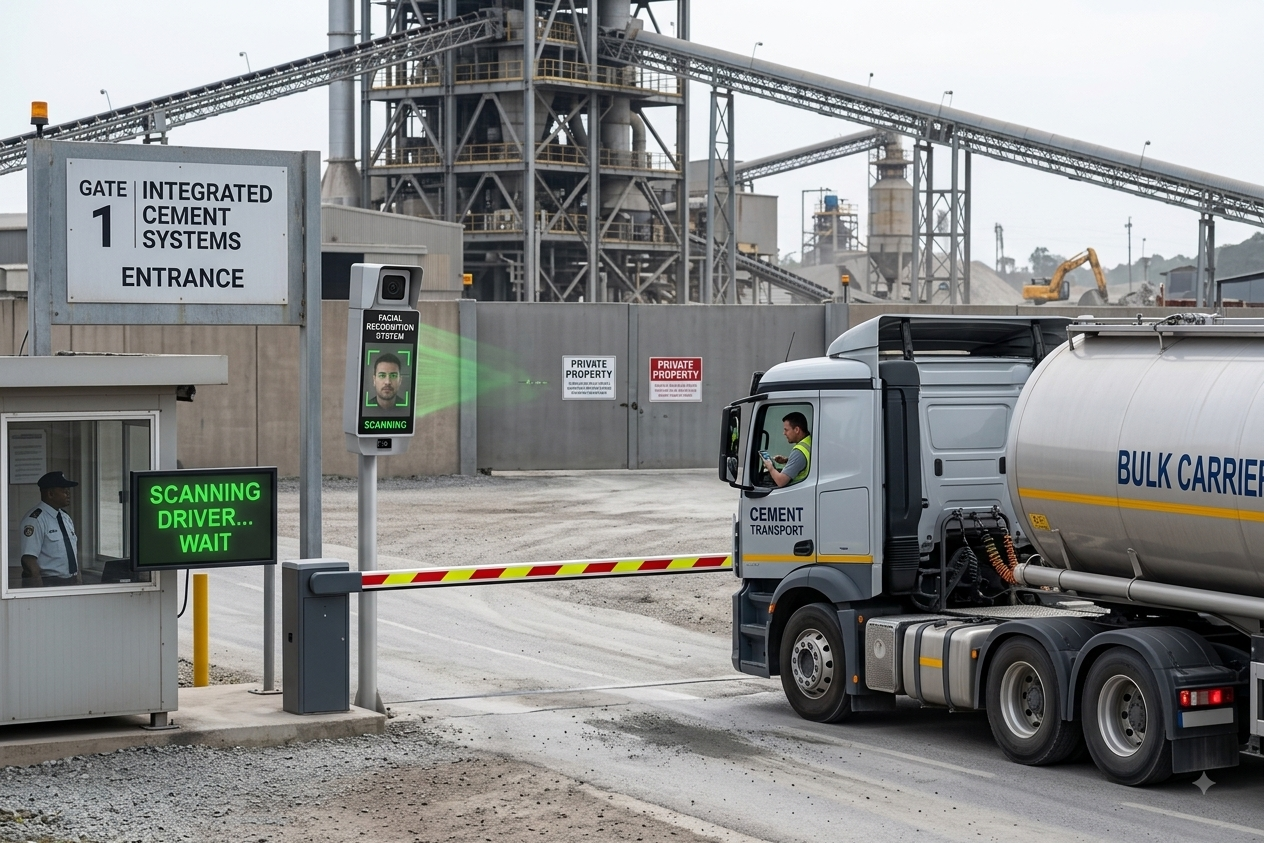
At Helious Tech Solutions, gate identity runs through the Gate Access Control module of TAT Guard, powered by Secure Sight, which is also deployable as a standalone access management system. The relevant features:
- DigiLocker-based facial recognition: Drivers, employees, contractors and visitors are verified against a government-issued document rather than a guard's judgement, supporting the accuracy duty.
- Digital registration and approval workflows: A digital enrollment step replaces the paper ledger and is the natural place to present notice and record the basis for processing.
- Vehicle and driver cross-verification: FASTag, LPR and RFID are checked in real time against VAHAN and Sarathi; any mismatch triggers denial, an alert and timestamped footage.
- PPE compliance at the gate: Safety-gear checks happen before entry, so safety and access decisions share one record.
- Driver face match at the weighbridge: The AI Unmanned Weighbridge Automation System confirms the driver at weighment, closing the swap window between gate and scale.
6. Restricted-zone person detection: Cameras on areas such as substations or tippler zones flag anyone without access and raise an instant alert with footage; the enrolment notice should cover this use.
Retention periods, notice text and fallback routes remain the plant's decisions as data fiduciary and should be settled during deployment planning.
Conclusion
Facial recognition at factory gates is lawful and operationally sound, but it is not only a technology decision. Substantive DPDP duties start in May 2027 and the SPDI Rules apply until then. Plants that map who they enrol, give drivers and contractors a real alternative, separate templates from logs and bind vendors contractually will be ready. Those that wait will be retrofitting consent into a system already full of data.