Quick Summary
Indian plants can verify trucks and drivers against government records instead of photocopies. This guide explains the four road-side systems behind modern plant logistics software — VAHAN for vehicle registration, Sarathi for driving licences, DigiLocker for consent-based documents and NPCI's NETC FASTag for tag-based identification — what each verifies, how plants access them, and their limits.
Introduction
A transporter sends a replacement truck at 11 p.m. because the scheduled one broke down. The guard at Gate 2 gets a photocopied RC, a WhatsApp photo of a driving licence and an insurance printout. He cannot tell whether the fitness certificate lapsed last month, whether the licence covers heavy goods vehicles, or whether the number plate belongs to this truck at all. The dispatch queue is backing up, so he lets it in.
Versions of that decision happen every shift at steel, cement, mining and power plants. The records that settle each question already sit in government systems. Modern plant logistics software queries them instead of trusting copies, turning vehicle monitoring in the plant from a gate register into a verified, auditable record.
What the Government API Stack Means for Plant Logistics
Four road-side systems hold most of what a plant needs to know about an inbound truck and its driver. Each answers only part of the question.Plants rarely connect to these databases one by one. The government's channel for logistics users is ULIP, the Unified Logistics Interface Platform, launched in September 2022 under the National Logistics Policy. For a ULIP APIintegration, the registered company submits a use case that is reviewed against the data requested. That access usually sits with the software vendor, not the plant's IT team.
VAHAN: Is This Truck Legally Fit to Be Here?
VAHAN is the national vehicle registration database. A VAHAN API call with a registration number returns what matters at a plant gate: RC status, fitness certificate validity, insurance and PUC validity, tax status, permit details for goods carriers, hypothecation and any blacklist entry. A blacklist entry can sit on an RC that still reads active, so check both fields.
Where registered gross and unladen weights are recorded, they give weighbridge automation software a useful sanity check. A tare far from the registered unladen weight, or a gross well above the registered GVW, deserves review, though body modifications can explain a tare gap.
VAHAN's blind spot is the physical vehicle. A cloned plate returns a clean RC verification. VAHAN validates the document; something at the gate still has to validate the truck.
Sarathi: Is This Driver Licensed for This Vehicle?

A driving licence verification against Sarathi confirms that the licence exists, whether it is active or suspended, its validity dates, and which vehicle classes the holder may drive. For a plant, the class matters as much as the date. A light motor vehicle licence does not authorise someone to drive a loaded tipper or a trailer into the yard.
Sarathi shares VAHAN's blind spot. It confirms that a valid licence exists, not that the person presenting it is the holder. A licence borrowed from another driver in the same fleet passes the lookup without a flag.
DigiLocker: Documents That Cannot Be Edited
DigiLocker addresses the authenticity of the document itself. Its issued documents come straight from the source system, such as a licence from Sarathi or an RC from VAHAN. Uploaded documents are scans the user added, and they carry no verification. A plant should accept only issued documents.
Access runs on consent. Through the DigiLocker API, the driver approves sharing and the issued document arrives directly in the plant's system. Edited PDFs and doctored photos drop out.
The catch: the driver needs a phone and network coverage at that moment, so complete consent once, at driver registration, not on every trip. The photo on the issued document then serves as the reference for driver verification by face match on later visits.
NPCI and NETC FASTag: The Tag Already on Every Truck
Under NPCI's National Electronic Toll Collection programme, trucks carry a passive RFID tag on the windscreen. NPCI states that a FASTag is vehicle-specific and cannot be transferred, and that its NETC mapper links each tag ID to a registration number, vehicle class and tag status.
A gate reader can therefore identify trucks without the plant issuing its own tags. Better still, once the tag is tied to a registration number, through authorised mapper access or by enrolling it against a VAHAN-verified vehicle, it should match the plate the ANPR camera reads. If they disagree, the plate is cloned or the tag has moved.
Toll transactions also yield FASTag tracking data through ULIP, useful for inbound ETAs where transporters run no GPS. With plazas reporting at up to 10-minute intervals, treat it as an arrival estimate, not a position feed.
What About Rail-Bound Material?
Plants receiving coal, ore or limestone by rail work with a separate government system, FOIS, which also connects through ULIP. We cover it in how FOIS integration transforms rail logistics in steel and power plants. This article stays with the four road-side portals.
How the Four Checks Work Together at the Gate
Each portal answers one narrow question. The value comes from cross-checking them against what cameras and readers see before the boom opens:
- Pre-arrival: the transporter registers truck and driver, VAHAN and Sarathi are queried, and the driver completes DigiLocker consent once.
- Approach: the FASTag reader and ANPR camera identify the truck; the tag-mapped and plate-read numbers must agree.
- Gate: VAHAN is re-checked for fitness, insurance or permit lapses, and the driver's face is matched against the DigiLocker reference.
- Weighbridge: verified vehicle and driver IDs attach to the weighment, and readings are compared against registered weights.
- Exit: the gate pass, dispatch record and ERP entry carry the same verified IDs.
A mismatch at any step should stop the truck and open an exception with footage, instead of leaving the call to a guard at 11 p.m. Built this way, a vehicle gate entry system becomes a verification layer rather than a logbook.
Implementation Realities Plants Underestimate
Government APIs can be slow, and they do go down. A gate that blocks every truck during an outage gets bypassed by hand, so a sound design holds the last verified result for a defined window and flags the truck for re-check.
Records also lag reality. VAHAN is only as current as the last RTO update, and older registrations can carry missing or inconsistent weight fields. Mismatches should open a review, not trigger an automatic fraud verdict.
Driver data needs a policy. Identity records fall under the Digital Personal Data Protection Act, 2023, so plants need a stated purpose, a retention period and a consent record.
Finally, for vehicle monitoring in a plant to hold up in an audit, verification results must sit in the same transaction as the weighment and dispatch, inside the ERP.
How Helious TAT Guard Puts the Government API Stack to Work

TAT Guard from Helious Tech Solutions treats government records as one input to a verification chain, not the whole chain. Cameras establish what is physically at the gate, records establish what is on file, and the system checks one against the other.
- FASTag and RFID Vehicle Identification — The Gate Access Control module reads the two together and verifies the vehicle against VAHAN and Sarathi in real time. A mismatch triggers denial, an alert and timestamped footage.
- DigiLocker-Based Driver Recognition — Secure Sight registers drivers via DigiLocker and matches faces at entry, closing the borrowed-licence gap.
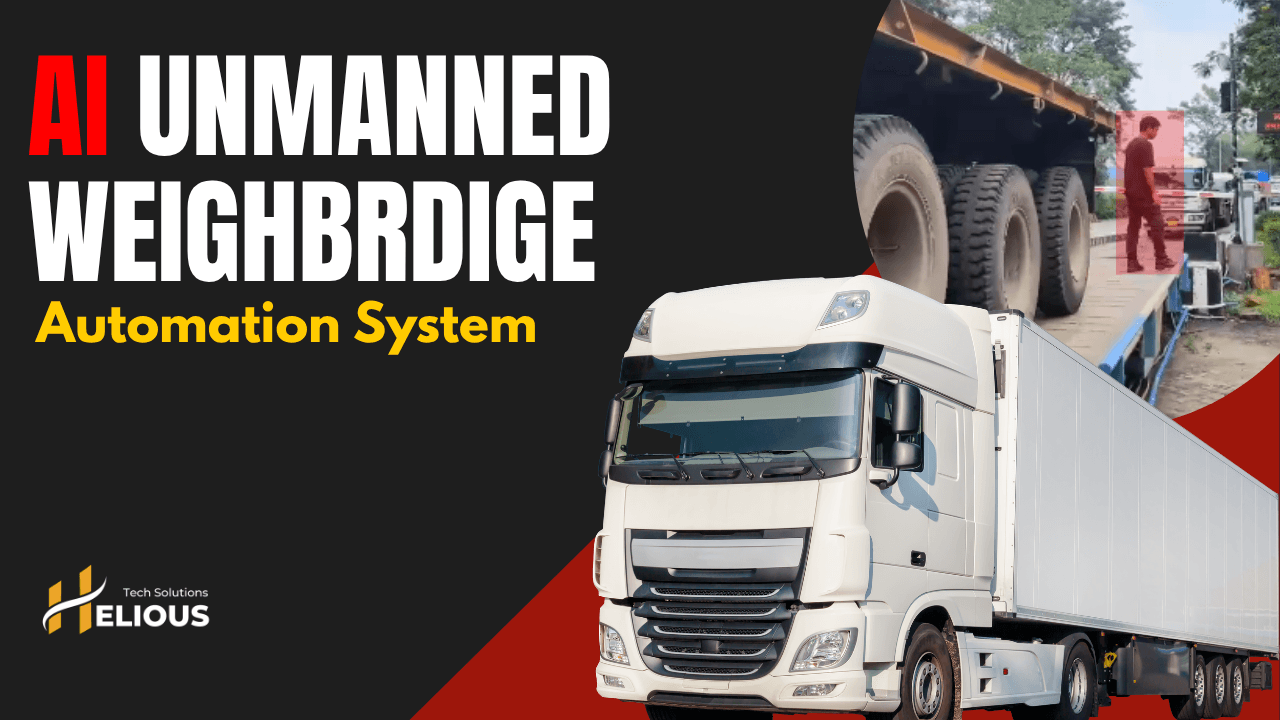
- Identity-Bound Weighment — The AI Unmanned Weighbridge Automation System runs zero-weight validation, a stability check, driver face match and top-view material verification before issuing a digital slip.
- Yard Monitoring — Camera-based plant vehicle tracking logs each verified truck's position, dwell time and zone compliance inside the boundary.
- Digital Gate Pass and ERP Sync — Exit uses a digital gate pass with dual authentication and automatic Transit Pass generation, reconciled in the plant's ERP.
Conclusion
VAHAN, Sarathi, DigiLocker and NETC FASTag each verify one thing well: the registration, the licence, the document and the tag. None of them, alone, proves that the truck and driver at your gate are the ones on record. That proof comes from cross-checking each source against cameras and readers at entry, then carrying the verified identity through to dispatch. When evaluating plant logistics software, ask two questions: which government sources does it query, and what does it do when they disagree?