Quick Summary
Truck congestion at industrial plants is usually blamed on the gate, but the queue is created by decisions made further inside weighbridge capacity, loading point availability, and stock position. This article explains how smart queue management works, why gate automation for industrial plants alone doesn't clear congestion, and where the real bottleneck sits.
Introduction
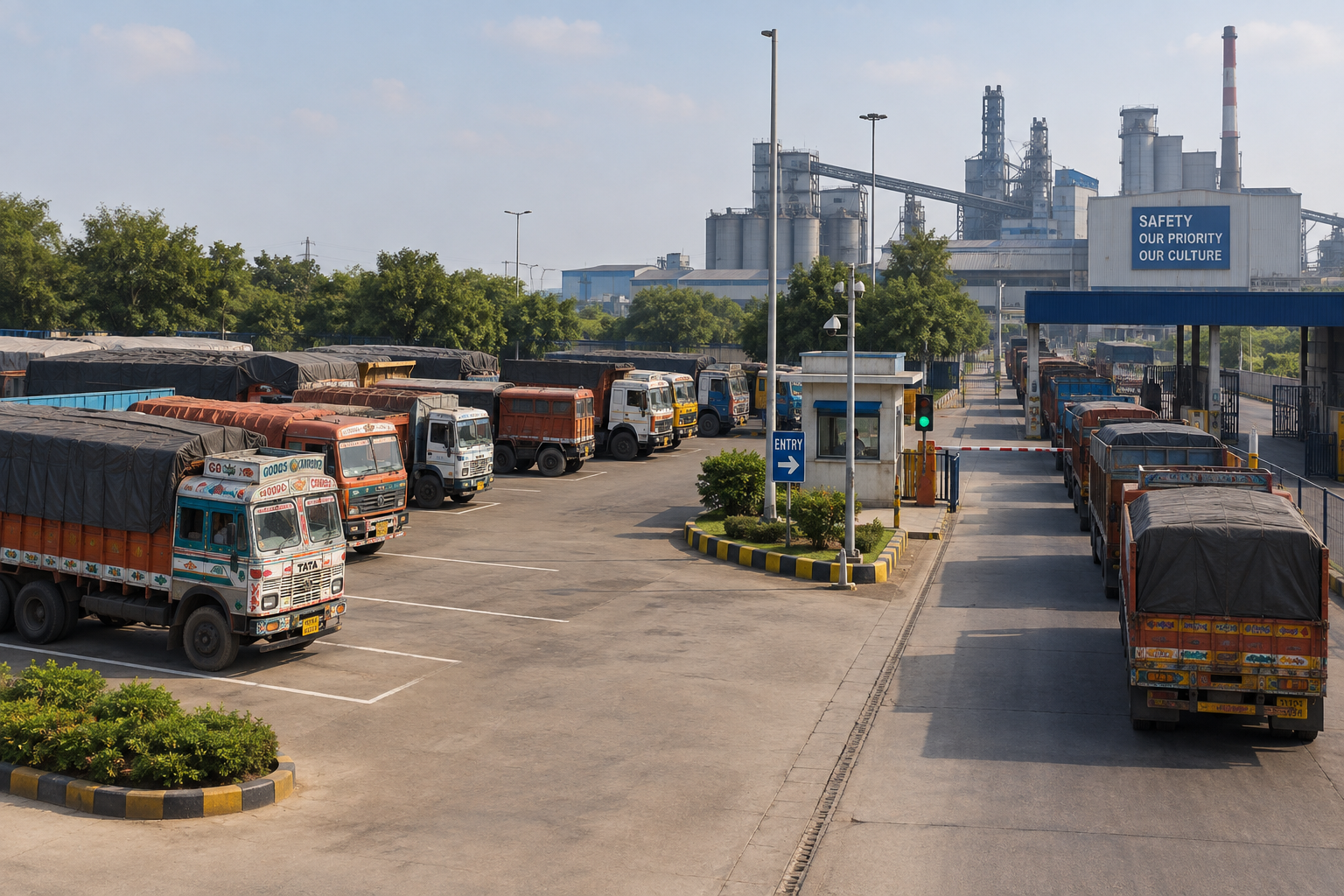
Drive past a large steel plant at 6 a.m. and the queue is already there — trucks nose-to-tail along the approach road, engines idling, drivers asleep in cabins that arrived at 11 the previous night. The gate hasn't opened yet, and by the time it does, the first two hours of the shift go into absorbing a backlog that formed while nobody was working.
The standard response is to look at the gate. Add a lane, another guard, a faster barrier. Those changes process trucks past a single point more quickly, but they don't address the question that determines queue length: how many trucks can the plant serve per hour, and what decides which one goes next?
That is what smart queue management exists to answer. It isn't gate hardware. It's a sequencing layer that decides truck order and destination based on what the plant can actually handle at that moment, rather than on who arrived first or argued hardest with the security supervisor.
The Queue Forms Before the Truck Reaches the Gate
A queue is a mismatch between arrival rate and service rate. If 40 trucks arrive in a two-hour window and the plant can weigh, load, and dispatch 18, a queue of 22 exists regardless of how efficient the gate process is.
Most plants have no mechanism to influence the arrival side of that equation. Transporters dispatch when it suits their scheduling, drivers arrive early to secure position in an informal queue, and the plant discovers the day's arrival pattern only when trucks are already parked outside. By then the only lever left is service rate, constrained by infrastructure that can't change within a shift.
This is also why truck turnaround time measured from gate-in understates the problem. A plant reporting a 90-minute average may have trucks that waited nine hours on the approach road before that clock started. The transporter is paying for those hours. The plant isn't measuring them.
Why Gate Automation Alone Doesn't Clear Congestion
Gate automation for industrial plants — RFID or FASTag-based vehicle identification, ANPR/LPR cameras, driver verification, automatic boom barriers, solves a genuine problem. It removes paperwork, eliminates the guard-booth ledger, cuts identity verification to seconds, and produces something a manual gate never does: a reliable, timestamped record of when each vehicle entered.
What it doesn't do is decide whether that truck should have been let in at all.
A gate system can confirm in seconds that a vehicle is authorised. It cannot tell you that the weighbridge already has six trucks queued, that the loading point serving that material is mid-changeover, or that admitting this truck now relocates congestion 200 metres inside the boundary wall. That is the common failure pattern in partially automated plants: the external queue shrinks, the internal queue grows, and total turnaround barely moves.
The Weighbridge Is Usually the Constraint That Builds the Queue
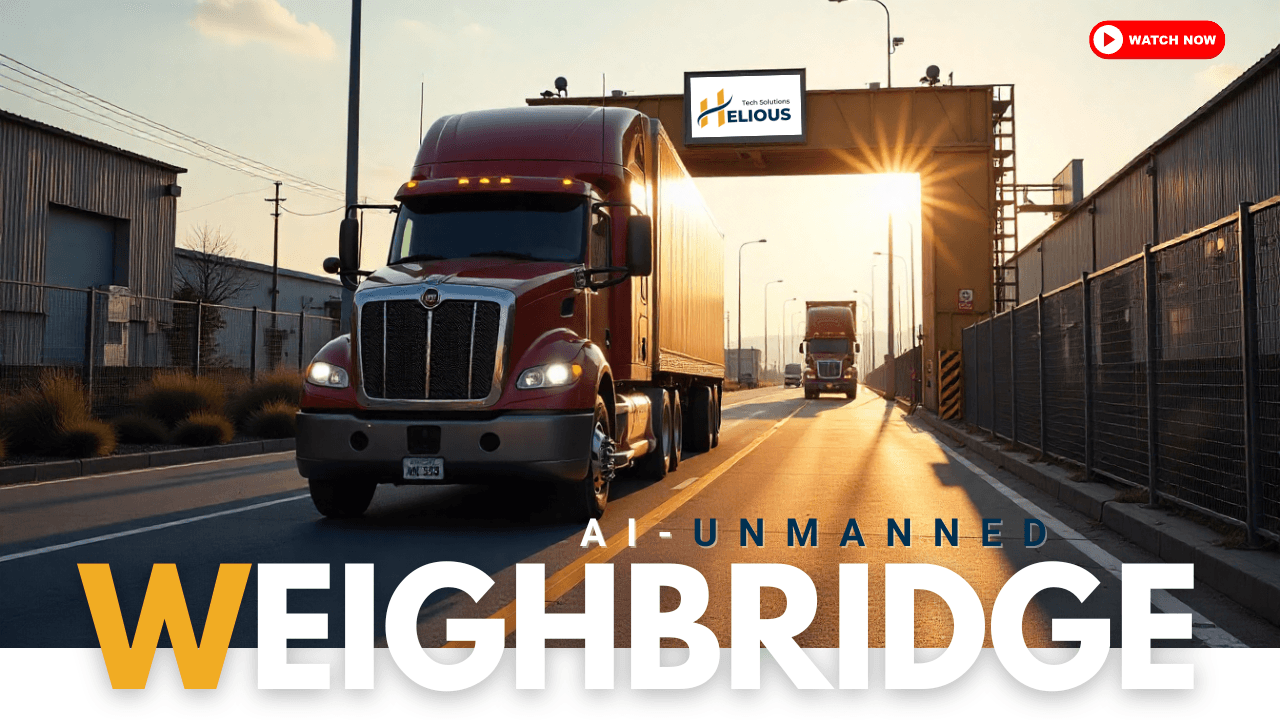
In most heavy-industry plants the weighbridge, not the gate, is the narrowest point in the chain. Every truck crosses it, usually twice. A manual cycle, operator instruction, positioning, weight capture, slip printing, signature, takes several minutes per vehicle, and each minute compounds across the queue behind it.
This is where a weighbridge automation system changes queue behaviour rather than just weighment accuracy: when cycle time at the tightest constraint drops, service rate rises and the queue shortens without anyone touching the gate.
The case for an unmanned weighbridge system in India is usually built around fraud prevention — closing the manual override window where weights are altered or slips reissued. That's real, but the throughput gain is often larger, particularly at plants running high volumes across a single weighbridge.
What to Actually Compare When Evaluating Vendors
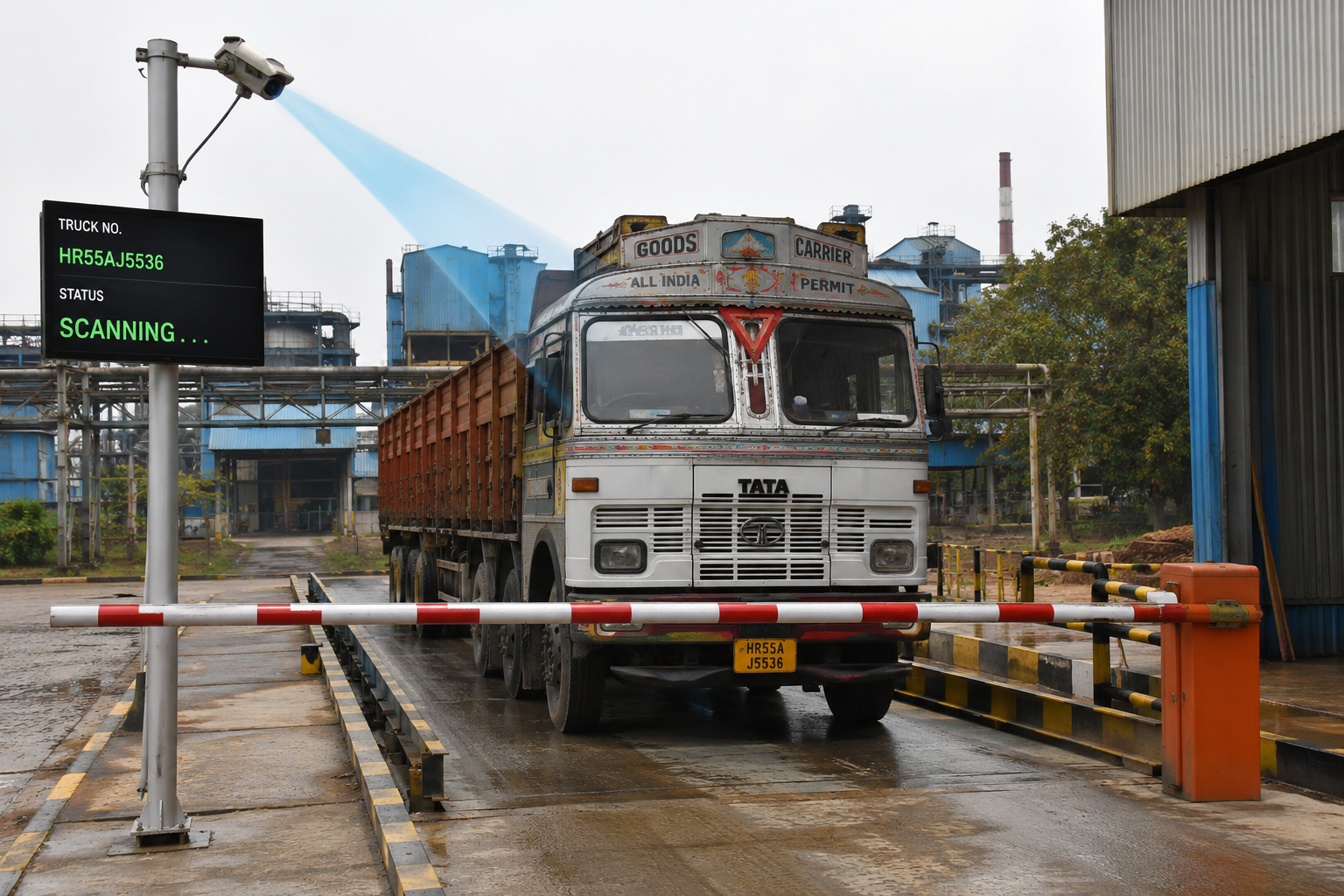
Teams searching for the best weighbridge automation company in India tend to compare sensor counts and hardware specifications. More useful criteria:
- Does it require replacing the weighbridge?
- Camera-native systems sit on top of existing load cells regardless of brand, which changes capital cost considerably.
- What hardware needs maintaining?
- Beam cutters, loop detectors, and position sensors are failure points in dusty, high-vibration environments.
- How does data reach plant systems?
- Weighbridge ERP integration determines whether weighment data flows into SAP, Oracle, or a legacy ERP in real time, or gets re-keyed later — reintroducing the error and delay automation was meant to remove.
- What happens on exception?
- Overload, misalignment, unstable weight, identity mismatch. Vendors differ far more here than on the happy path.
A weighbridge that processes quickly but writes to the ERP overnight will still generate dispatch disputes. Integration isn't a bolt-on.
How Smart Queue Management Sequences Trucks
A smart queue management system sits between arrival and loading, replacing first-come-first-served with what's better described as smart FIFO — sequencing that holds arrival order as a fairness baseline but overrides it where strict order would waste capacity. Each inbound vehicle is scored against live operational parameters rather than a single arrival timestamp:
- Historical turnaround performance per loading point — service time varies by point, shift, and material, so allocation from a plant-wide average produces schedules that don't survive contact with the yard.
- Stock position — sending a truck to a point where its material isn't staged moves the queue without removing the wait.
- Loading point capacity and current load — each point has a ceiling in trucks per hour; allocating past it shifts congestion from gate to bay.
- Internal transit time — the gap between holding area and assigned point is real cycle time, substantial in plants with long haul roads.
- Live vehicle count inside the boundary — the parameter that lets the system deliberately hold a truck outside rather than admit it to idle inside.
The output is an allocation, not just an order: which truck moves next, to which bay, and roughly when. Trucks can be staggered on approach rather than converging on the gate together — the only real mechanism a plant has to influence its own arrival rate.
Queue Management in Steel Plants and Other High-Volume Sites
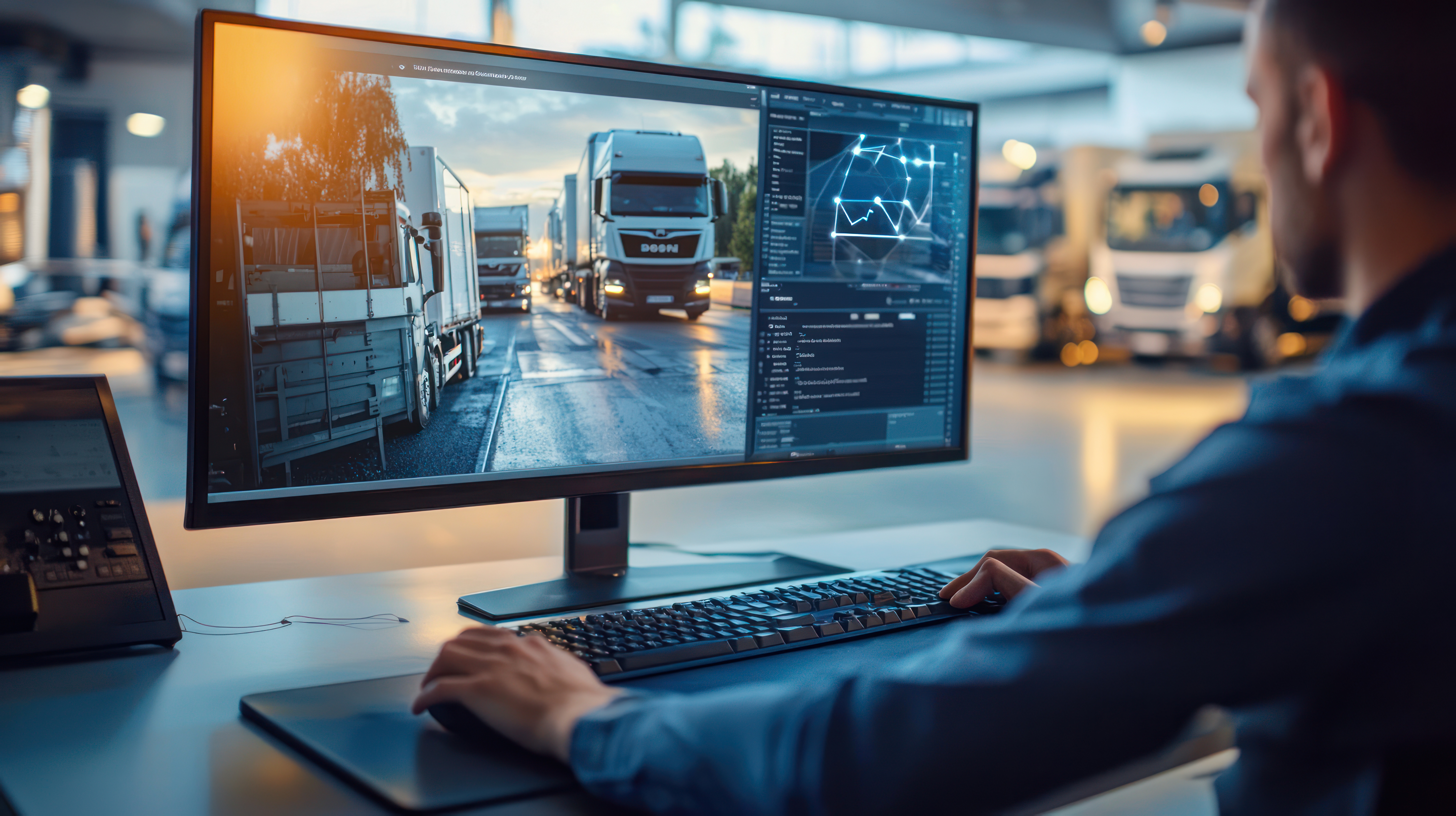
Queue management in steel plants carries complications a generic queuing model misses. Multiple grades are dispatched from physically separated stockyards, loading equipment is shared across points, and inbound raw material competes with outbound finished goods for the same weighbridges and internal roads. Sequencing has to account for material-to-point compatibility, not just availability.
Cement plants face seasonal surges where arrival rate can rise sharply within days, making arrival-side control more valuable than incremental service-rate gains. Thermal power plants running coal rakes have road and rail competing on the same site, where a rake under unloading locks up yard capacity road trucks need. The parameters that matter are broadly the same across these sites; their weighting is not, and a system that can't be configured for that difference will underperform somewhere.
What Queue Management Won't Fix
Worth being direct about the limits, because they decide whether a deployment succeeds.
Sequencing improves allocation; it doesn't create capacity. If the plant can serve 18 trucks an hour and 40 arrive, better sequencing cuts wasted movement and idle time, but a queue still exists. What changes is that it becomes visible in data — and a plant that can see its constraint can invest against it instead of assuming "the gate is slow."
The system is also only as good as its inputs: if stock location lags reality or loading point status isn't updated promptly, allocation quality degrades with it. For a low-volume site with two predictable loading points, the integration effort across weighbridge, yard, and dispatch systems may exceed what manual coordination costs. The case strengthens once volume and loading point count exceed what one coordinator can track across a shift.
How Helious TAT Guard Handles Queue, Gate and Weighbridge as One Chain
Helious treats congestion as a single chain rather than separate gate, weighbridge, and yard problems — which matters, because optimising one stage in isolation relocates the queue rather than removing it. TAT Guard runs that chain as a single camera-native truck turnaround time system, with nine modules that deploy individually.
- Smart Queue Management System (SQMS) — Patent filed. Replaces first-come-first-served with AI-driven smart FIFO: every inbound vehicle is scored on five parameters and released to the optimal bay at the optimal moment. This is gate entry prioritisation, not in-plant navigation.
- Gate Access Control System — FASTag, LPR, and RFID identification verified in real time against Vahan and Sarathi, with DigiLocker-based facial recognition for drivers and contractors and PPE compliance checked at entry. Any mismatch triggers denial, alert, and timestamped footage.
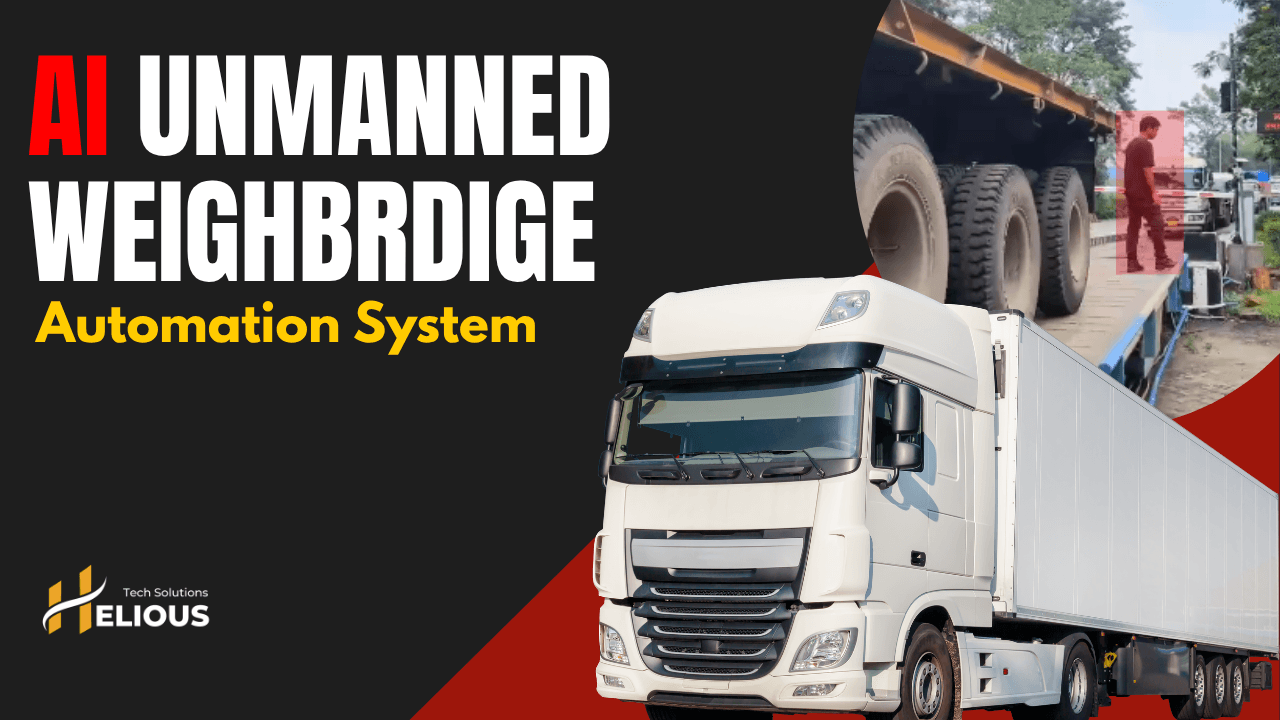
- AI-Unmanned Weighbridge Automation System — Patent filed. Around 45 seconds from wheels-on to boom-up: zero-weight validation, stability check, driver face match, top-view material verification, digital slip, ERP sync. Existing load cells remain the physical scale, so it fits any weighbridge brand.
- Yard Operations Automation and Monitoring — Camera-based visibility on position, dwell time, movement path, and zone compliance for every vehicle inside the boundary, closing the blind spot between gate-in and weighment.
- Dispatch Planning — Allocates trucks against the production plan once a batch is ready, sequences them into the outbound queue via SQMS, verifies loading through AI-powered bag counting, and completes exit on a digital gate pass already reconciled in the ERP.
The automation layer is camera-only — no beam cutters, loop detectors, or position sensors to maintain — which Helious cites as the reason for deployment in weeks and a published 99.95% uptime across 15,000+ transactions daily. For sites handling rail alongside road, Rake Guard covers wagon movement and tippler automation on the same spine.
Conclusion
The queue outside the gate is a symptom. It forms because arrivals exceed the rate at which the plant can serve trucks, and persists because the decision about which truck moves next is made informally, without visibility into weighbridge load, stock position, or loading point capacity.
Automating the gate makes entry faster. Automating the weighbridge raises service rate at the usual constraint. Smart queue management connects the two, pacing arrivals against real downstream capacity instead of letting trucks accumulate and then processing them quickly into a yard that can't absorb them. Where congestion is a daily operating condition rather than a seasonal event, that sequencing layer is where turnaround time actually improves.