Quick Summary
Truck turnaround time rarely improves by adding gates or weighbridges. This article ranks nine practical ways to reduce truck turnaround time by how quickly each one pays back starting with stage-wise vehicle TAT tracking and process fixes, moving through gate automation and weighbridge automation, and ending with the capital-heavy changes most plants wrongly attempt first.
Introduction

Ask a dispatch head what his plant's truck turnaround time is, and you'll usually get a number. Ask him where those hours are actually spent — gate-in to weighbridge, weighbridge to loading bay, loading to gate-out — and the confidence disappears. The register says the truck entered at 09:40. Nobody can say what it did between 11:15 and 14:00.
That gap is the whole problem. Most plants attack truck turnaround time with capital: a second weighbridge, a wider approach road, another gate. Those help, eventually, at high cost. Meanwhile, the cheapest hours are sitting in unmeasured queues, paper documentation, and yard dwell that no one owns.
The ranking below is ordered by how fast each intervention typically returns value — measured as capital required against hours recovered. Actual payback depends on your truck volume, detention charges, and manpower cost, so treat this as a sequence, not a spreadsheet. A plant moving 300 trucks a day will see very different economics from one moving 40.
Tier 1: Near-Zero Capital, Fastest Return
1. Stage-Wise Vehicle TAT Tracking Before Anything Else
You cannot reduce what you measure to a single number. Total turnaround time of 14 hours tells you nothing actionable. Break it into gate-in to parking, parking to weighbridge, weighbridge to bay, loading duration, bay to exit weighment, and exit — and the bottleneck usually announces itself within a week.
Vehicle TAT tracking at stage level can begin with disciplined timestamping even before automation. Most plants that do this honestly discover something uncomfortable: the loading bay isn't the constraint; the wait for documentation is. This step costs almost nothing and redirects every rupee spent afterwards.
Limitation: manual timestamps get rounded, backdated, and forgotten during shift changes. Treat manual baselining as a diagnostic exercise, not a permanent system.
2. Slot Booking and Pre-Arrival Documentation
Trucks arriving unannounced create the queue that everything else then tries to manage. Moving order verification, e-way bill checks, driver documents, and vehicle fitness validation to before arrival removes verification from the critical path at the gate.
A truck whose paperwork is already cleared needs seconds at the gate, not minutes. Multiply by 200 trucks, and you have recovered gate capacity without touching the gate.
Limitation: transporter compliance is the constraint, not technology. Plants with fragmented spot-market carriers will see slower adoption than those with contracted fleets.
3. Fixing Shift-Change and Break-Hour Collapse
Look at your hourly throughput curve. Nearly every plant shows a dead band around shift handover and lunch. Staggering weighbridge and gate staffing across these windows is a rostering decision with zero capital cost and immediate effect.
This is also the clearest argument for unmanned operation later — a system that doesn't take breaks removes the problem permanently rather than scheduling around it.
Tier 2: Software and Camera-Based Automation

4. Gate Automation System for Entry and Exit
The guard booth is where manual data entry, document checking, and identity verification stack up in series. A gate automation system runs them in parallel: number plate recognition, FASTag or RFID vehicle identification, driver verification, and document validation executing simultaneously rather than one clerk working down a list.
The secondary gain is fraud control. Automated gate entry creates a timestamped, tamper-resistant record of who entered, in which vehicle, against which order. Disputes that previously consumed hours of investigation are resolved from the log.
What it cannot do: gate automation fixes the entry event, not the queue outside it. Plants that automate the gate alone often find the congestion simply relocates to the approach road.
5. AI-Driven Queue Management
First-come-first-served is the single most expensive convention in plant logistics. It ignores material availability, bay readiness, load type, and priority, so a truck for a bay that won't be free for three hours blocks one for a bay that is free now.
Intelligent sequencing scores inbound vehicles against real conditions and releases them when their destination is actually ready. The trucks still arrive in the same order — they just stop idling in the wrong sequence. Fuel burn outside the gate drops alongside dwell time.
Limitation: queue logic is only as good as its input from production and dispatch planning. If batch-ready signals arrive by phone call, the algorithm is guessing.
6. Weighbridge Automation
Weighment is usually the highest-frequency stop in the chain and the one with the widest variance. Manual weighment involves positioning, operator judgement on stability, manual entry, slip printing, and signature — and each is a delay and a manipulation window.
Camera-native weighbridge automation compresses this: zero-weight validation, weight-stability confirmation, driver face match, top-view material verification, digital slip, and ERP posting without operator intervention. Critically, the existing load cells stay — the automation layer sits on top of the scale you already own, which is why this lands in Tier 2 rather than Tier 3.
7. Inplant Vehicle Tracking Across the Yard
Between gate-in and weighment, most automated plants go dark. Nobody can say where a truck is or how long it has idled. This is why plants that automate the gate and weighbridge still report disappointing total TAT — the unmeasured middle absorbs the gains.
Vehicle monitoring in plant closes that blind spot: continuous position, dwell duration, movement path, and zone compliance for every vehicle inside the boundary. In-plant vehicle tracking also converts safety enforcement from patrol-based to exception-based, unauthorised zone entry raises an alert instead of waiting for a supervisor to notice.
Plant vehicle tracking is what makes stage-wise TAT data reliable rather than reconstructed after the fact.
8. Digital Dispatch, Loading Verification, and Gate Pass
Loading disputes and manual tally counts create the tail-end delay that most TAT reports underestimate, because the clock is often stopped at loading completion rather than gate-out. Camera-based loading verification — including bag counting for bagged dispatch — plus digital gate pass and automatic transit pass generation removes the paper loop between shift office, loading bay, and exit gate.
Limitation: this requires ERP integration to be genuinely useful. A digital slip that still needs manual re-entry into SAP has moved the delay, not removed it.
Tier 3: Capital-Heavy, Longest Payback
9. Additional Weighbridges, Bays, and Road Widening
Physical expansion works. It is also the slowest to pay back — months of civil work, capital approval cycles, and disruption during construction. The argument for placing it last is simple: plants that complete items 1 through 8 frequently find the additional weighbridge is no longer required, because the existing one now processes in under a minute instead of five.
Build concrete only after you know the software-recoverable hours are already recovered. Otherwise, you are buying capacity to service an inefficiency.
How Helious TAT Guard Addresses These Challenges

Items 4 through 8 above are individually available from many vendors. The practical difficulty is that they only compound when they share one data spine — gate, queue, weighbridge, yard, and dispatch all reading from and writing to the same vehicle record.
When these run as separate procurements, the vehicle identity is re-established at every stage, timestamps don't reconcile, and stage-wise TAT has to be stitched together after the fact. TAT Guard is built as a single camera-native truck turnaround time system with five core modules rather than five integrated products.
- Smart Queue Management System (SQMS) — Replaces first-come-first-served with AI-driven smart FIFO. Every inbound vehicle is scored on five parameters and released to the optimal bay at the optimal moment, so a truck waits only when its destination is genuinely occupied. Idle dwell outside the gate collapses, and the fuel burned by queuing trucks goes with it. The same throughput then runs with a fraction of the marshalling staff. Worth being precise about scope: this is gate entry prioritisation, not in-yard navigation — the intelligence is in deciding who moves next, not routing where they drive. SQMS is the second patent filed in the TAT Guard family.
- Gate Access Control System — One system for every person and vehicle crossing the plant boundary, running verification in parallel rather than in series. Vehicles are identified by FASTag, number plate recognition, and RFID, then validated in real time against the Vahan & Sarathi portal. People — drivers, contractors, visitors — clear DigiLocker-based facial recognition, with digital registration and approval workflows replacing the paper ledger at the guard booth. PPE compliance is checked at the gate itself: no helmet, no entry. Any mismatch across vehicle, driver, or document triggers denial, an alert, and timestamped footage within seconds, which is what turns a later dispute into a log lookup instead of an investigation. These access and safety capabilities are powered by Secure Sight, the platform's embedded identity and safety intelligence.
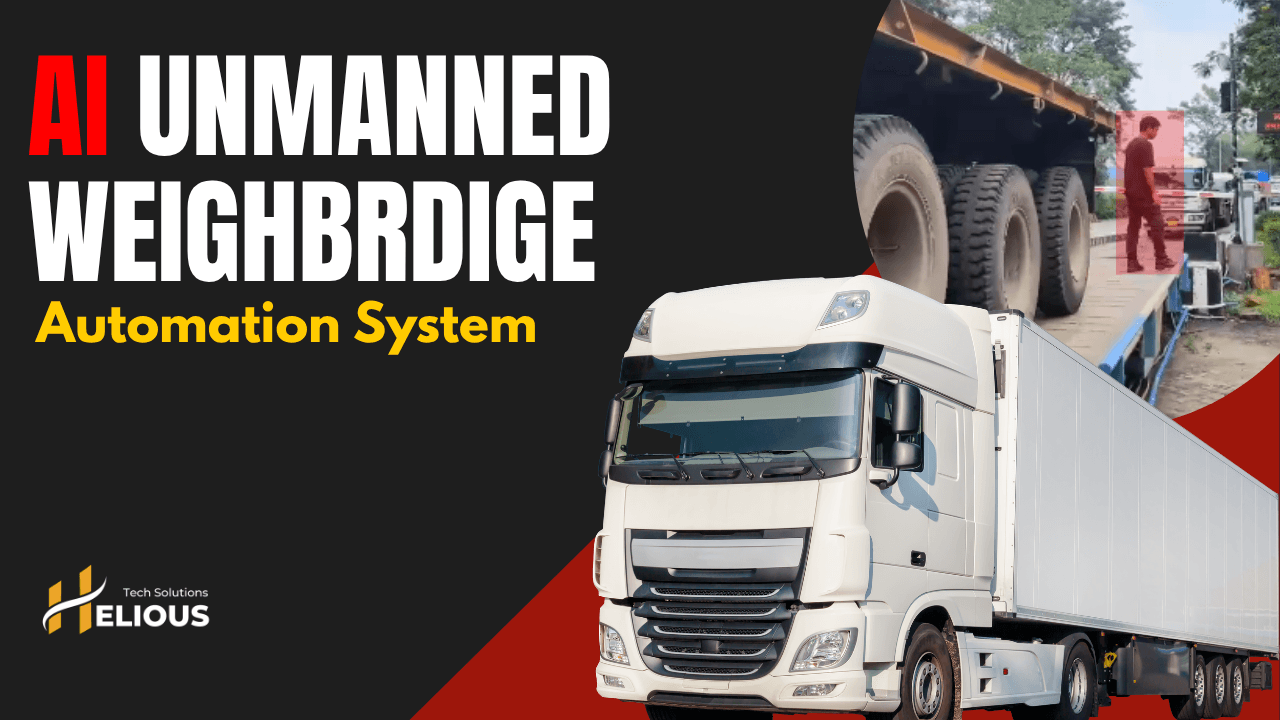
- AI-Unmanned Weighbridge Automation System — Covering zero-weight validation, weight-stability confirmation, driver face match, top-view material verification, digital slip generation, and ERP sync. Because no operator is in the loop, there is no manual override and no manipulation window between the reading and the record. The load cells you already own remain the physical scale — the camera-native automation layer sits on top of any weighbridge, any brand, which is why this is an upgrade rather than a replacement. That distinction is what keeps weighment automation in the fast-payback tier instead of the capital tier. Full details on the AI-Unmanned Weighbridge Automation System.
- Yard Operations Automation and Monitoring — This is the module that closes the dark zone between gate-in and weighment, where most plants lose the gains they made at the gate. It maintains continuous camera-based visibility on every vehicle inside the boundary: current position, dwell duration, movement path, and zone compliance. Excess idling or entry into an unauthorised zone raises an instant alert, so enforcement becomes exception-based rather than dependent on a supervisor noticing. Every movement leaves a timestamped, auditable record, which is what makes stage-wise vehicle TAT tracking a measurement rather than a reconstruction. Combined with SQMS, it is the difference between running a yard and merely fencing one.
- Dispatch Planning — Most plants still run dispatch on phone calls between the shift office and the gate, and that loop is where the tail end of turnaround time quietly accumulates. Dispatch Planning closes it: the moment a batch is flagged ready, trucks are allocated against the plan and sequenced into the outbound queue through SQMS. Loading is verified by camera, including AI bag counting for bagged dispatch, so quantity disputes are settled at the bay rather than after the vehicle has left. Exit completes on a digital gate pass with dual authentication and automatic transit pass generation, and the dispatch arrives in the ERP already reconciled.
Four further modules extend the same spine when the core chain is running — Smart Store warehouse management, AI bag counting, and Secure Sight as a standalone access system — so the platform follows material past dispatch into the store.
Across all of it, cameras are the sensors. There are no beam cutters, loop detectors, or position sensors to maintain, which is why deployment runs in weeks rather than months and why civil work stays minimal.
Conclusion
The sequence matters more than the technology. Measure stage-wise before you automate, automate the gate and weighbridge before you touch the yard, close the yard blind spot before you pour concrete. Plants that follow this order typically recover most of their addressable turnaround time before the capital budget is ever opened — and the ones that reverse it end up with an expensive second weighbridge servicing the same queue.
Each step also makes the next one cheaper: stage-wise data tells you which weighbridge problem is worth solving, and a yard that is finally visible tells you whether you need concrete at all.
The practical starting point is a survey, not a purchase order — camera positions, network availability, ERP integration path, and a log-only run before enforcement.
Start where the hours actually are. Request a weighbridge automation demo or talk to the Helious team about a plant survey.