Quick Summary
Weighbridge software records weights and prints slips; weighbridge automation removes the operator from the weighing cycle altogether. This article explains seven practical differences between the two, covering fraud control, vehicle identification, staffing, speed, data integrity, integration and cost, so plant owners can judge whether their site needs better software or a full automatic weighbridge system.
Introduction
Ask a plant owner whether their weighbridge is automated, and most will say yes. There is a PC in the cabin, the indicator talks to it, and the slip prints on its own.
Now ask three follow-up questions. Who types the vehicle number? Who decides the truck is fully on the platform? Who presses the button that captures the weight? In most plants, the answer to all three is the same person: the operator.
That is where the confusion lives. Weighbridge software and weighbridge automation are often sold, and bought, as if they were the same thing. They are not. Software digitises the record. Automation changes who, or what, controls the transaction.
The distinction matters most in steel, cement, coal and mining operations, where every weighment carries money. Inbound raw material is paid for on weight, and outbound dispatch is billed on it. A small error or manipulation per truck compounds quickly across hundreds of trucks a day. Here are the seven differences that actually affect your plant.
What Weighbridge Software Actually Does
Weighbridge software is the record-keeping layer. It reads the weight from the indicator over a serial or network connection, stores first and second weighments, calculates net weight, and prints or emails a weighment slip. Most packages also offer party and material masters, shift reports and an export to accounts or ERP.
That is genuinely useful. It replaces handwritten registers, reduces calculation errors and gives management a searchable history.
What it does not do is verify anything. The software trusts whatever the operator enters and whenever the operator clicks. If the wrong vehicle number is typed, a truck is weighed with one wheel off the platform, or a second weighment is captured while someone stands on the deck, the software records it faithfully. Clean data, wrong transaction.
What Weighbridge Automation Adds
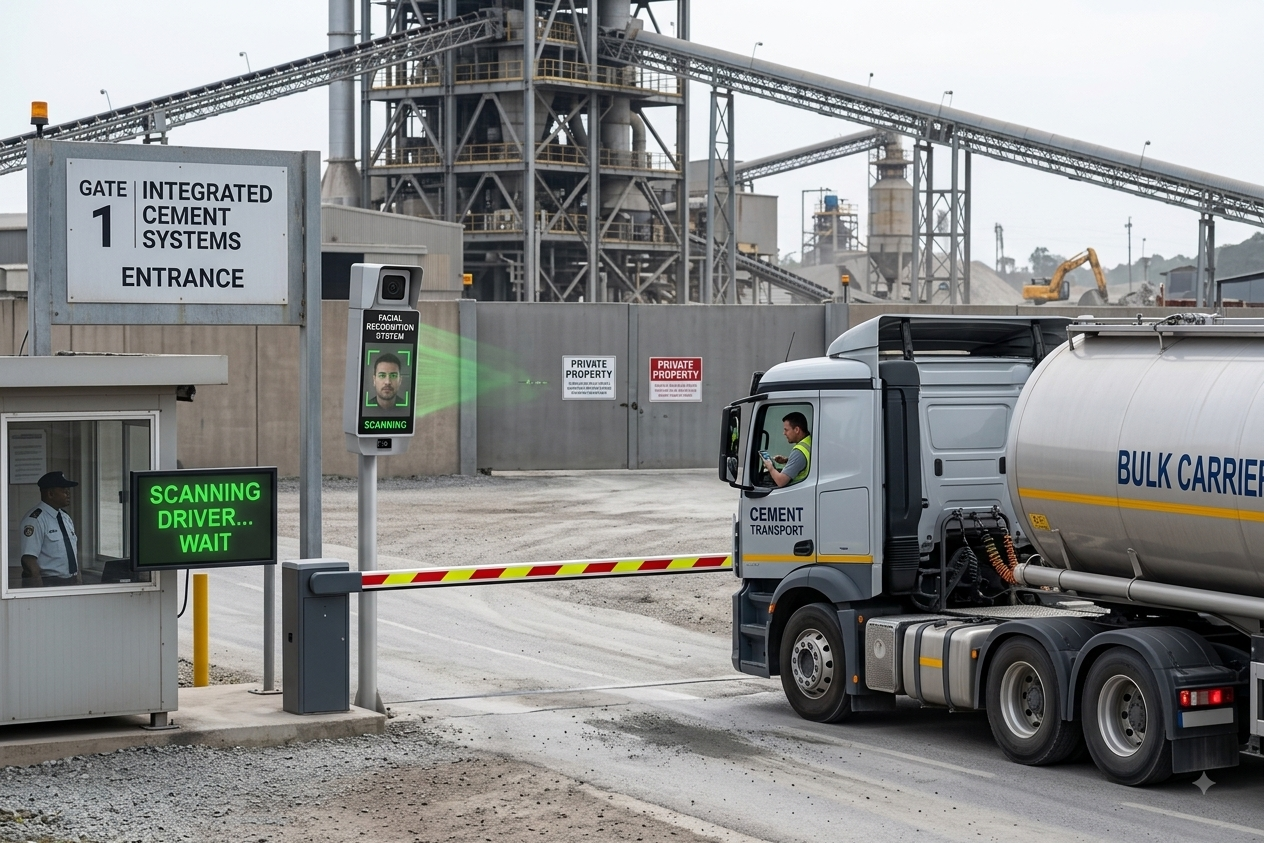
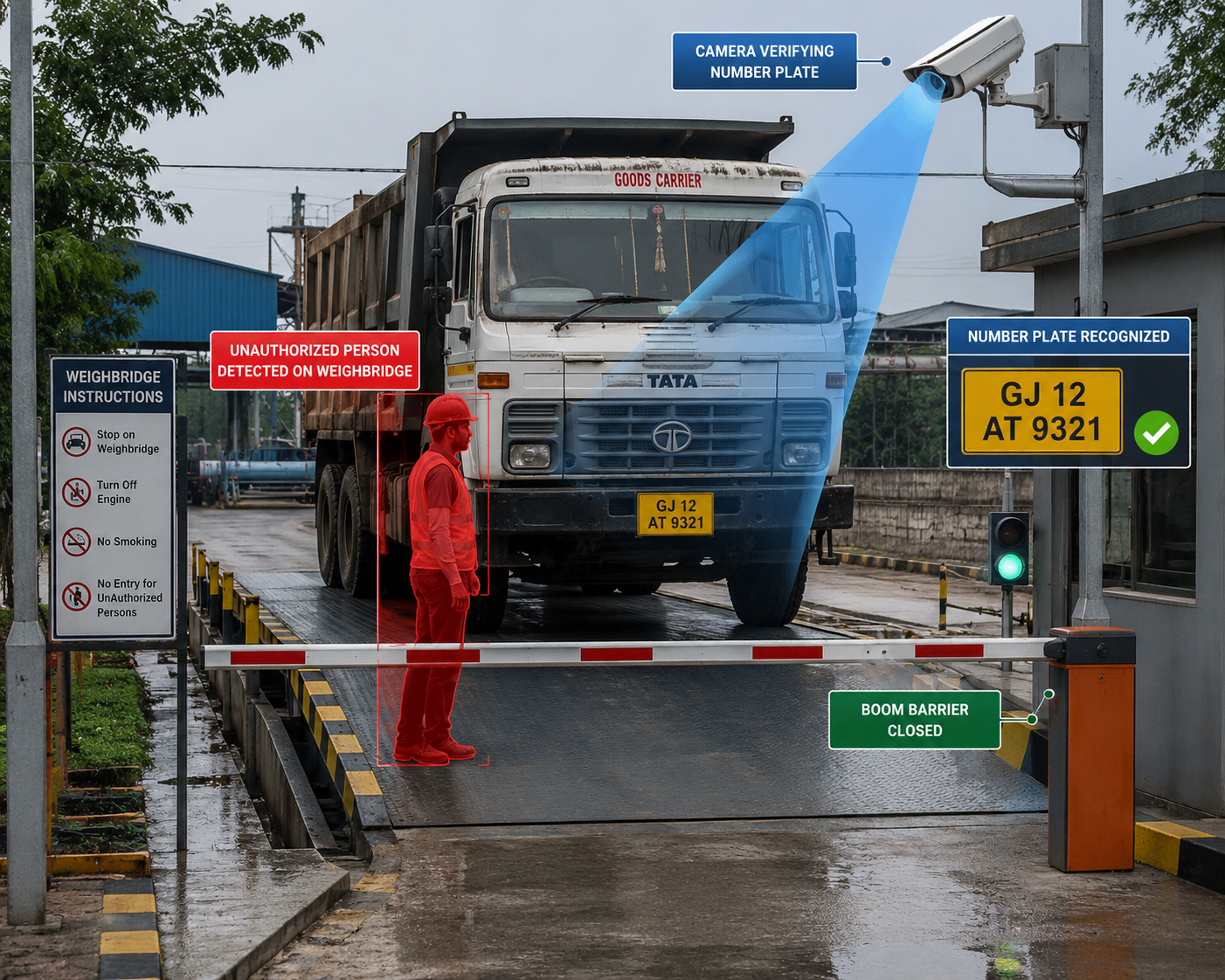
Weighbridge automation wraps the weighing process in sensors and logic so that the system, not a person, decides when a weighment is valid. A typical automatic weighbridge system combines several layers:
- Vehicle identification through RFID tags, FASTag or ANPR cameras, so the truck number is read, not typed.
- Position verification through cameras or physical sensors, confirming the whole vehicle is on the platform.
- Validation rules, such as zero-weight checks before entry, weight stability before capture, and tare tolerance against history.
- Access control, through boom barriers and traffic lights that release the truck only after a valid weighment.
- Evidence capture, with images or video tied to every transaction.
When all of this runs without anyone in the cabin, it becomes an unmanned weighbridge system. Software still sits underneath. Automation simply stops depending on human judgement at each step.
7 Key Differences Between Weighbridge Software and Weighbridge Automation
1. Who Controls the Transaction
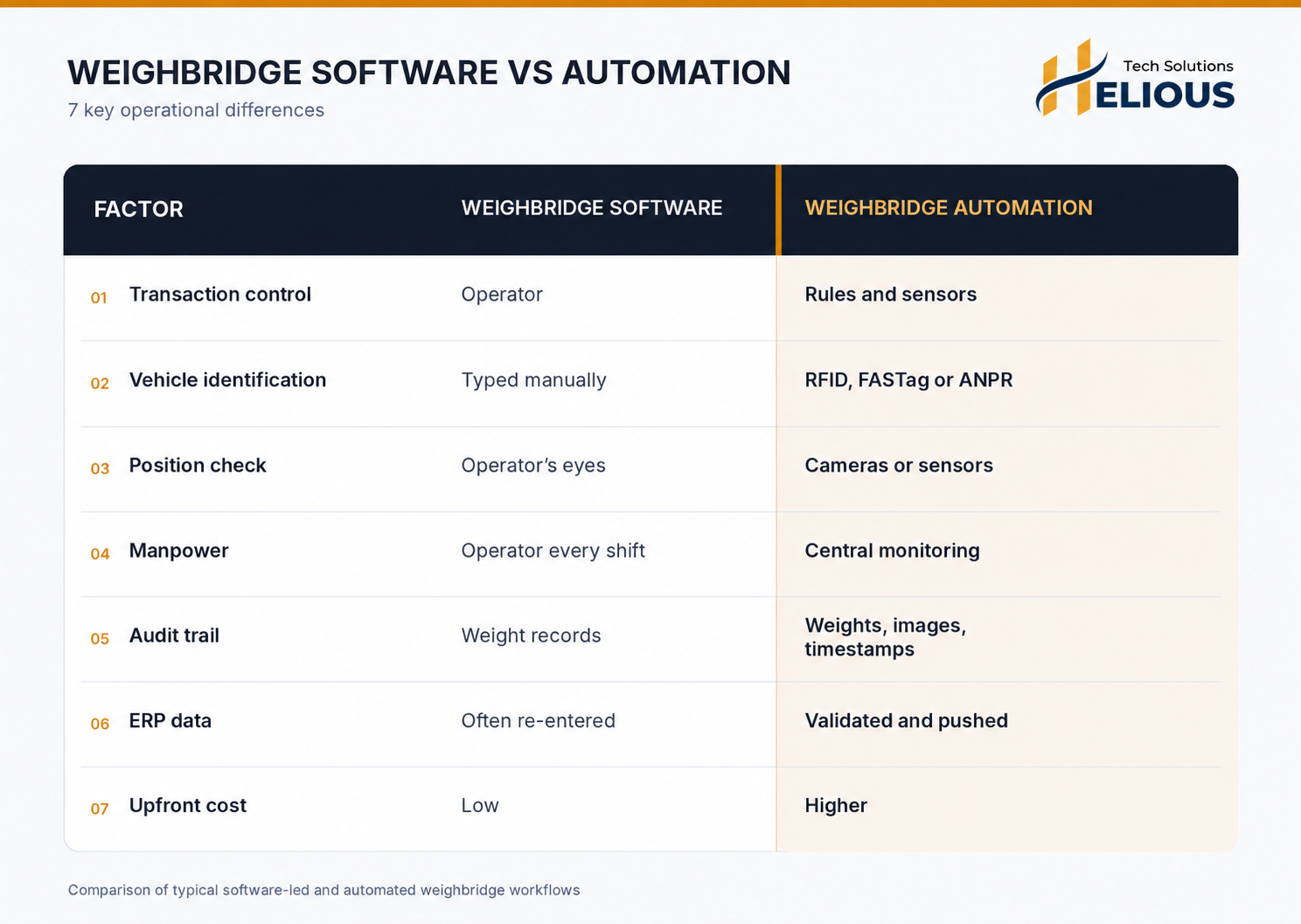
With software alone, the operator controls every decision: when to start, which vehicle it is, when the reading is stable and when to save. With weighbridge automation, those decisions are made by rules. The truck is identified, positioned and weighed, and the barrier opens only if every check passes. Control shifts from a person to a process, and that is the single most important difference on this list.
2. Exposure to Manipulation
Software records whatever happens on the platform, including what should not. A truck partly off the deck, an extra person or object, a swapped vehicle or a reused tare all produce a normal-looking slip. Automation checks position, confirms zero before entry and captures weight only when the reading is stable. That narrows the window for manipulation considerably, though no system removes it entirely: collusion at the loading point, for example, sits outside the weighbridge.
3. Vehicle and Driver Identification
Manual entry of vehicle numbers is one of the most common sources of mismatched records. Automation reads the vehicle through RFID, FASTag or ANPR and can match it against the purchase order, delivery order or gate entry. Some systems add driver verification at the gate. Each method has limits: ANPR struggles with dirty, damaged or non-standard plates, and RFID depends on disciplined tag issue and recovery. Combining two methods is more reliable than relying on one.
4. Staffing and Shift Dependency
Software-based weighbridges need an operator for every shift, often at every weighbridge. That means rosters, relief cover, training and a person whose accuracy drops at 3 a.m. An unmanned weighbridge system runs the cycle itself, with a central control room monitoring several weighbridges and stepping in only on exceptions. People are not eliminated. They move from operating to supervising.
5. Speed and Truck Turnaround Time
A manual weighment includes waiting for the operator, keying in details, checking documents and printing the slip. Each step is small, but queues build at peak hours. Automation removes most of the data entry and synchronises barriers and signals with the weighing cycle. The weighbridge stops being a bottleneck, which shows up directly in truck turnaround time at the gate and dispatch yard.
6. Data Integrity and Audit Trail
Software produces a record. Automation produces evidence. Every transaction can carry the vehicle ID read, images or video from the platform, timestamps for each stage, and validation results. When a supplier disputes a weight or an auditor asks why a tare changed, the plant can show what happened instead of relying on a register. Integration also improves, because validated data flows into the ERP without manual re-entry.
7. Cost and Maintenance
Weighbridge software has a lower upfront cost and almost no field hardware to maintain. Automation needs cameras, readers, barriers, signals, networking and often civil work around the platform. Sensor-based setups add beam sensors or loop detectors, which fail in dust, rain and heavy traffic. Camera-based systems reduce that hardware but still need clean lenses, adequate lighting and stable power. The higher investment is justified by what it protects: material value, manpower cost and dispute resolution time.
At a Glance
Which One Does Your Plant Need?
Software alone can be enough for a low-volume site weighing low-value material, with a trusted operator and few disputes. A small aggregate yard or an internal transfer weighbridge often fits this profile.
Automation makes sense when any of these apply: high truck volumes, high-value inbound material such as coal, iron ore or scrap, frequent supplier or transporter disputes, multiple weighbridges across a large site, or recurring queues at the gate. If your weighbridge staff are the only control between a truck and a payment, the real question is not whether to automate, but how much exposure you are carrying until you do.
How Helious TAT Guard Addresses These Challenges
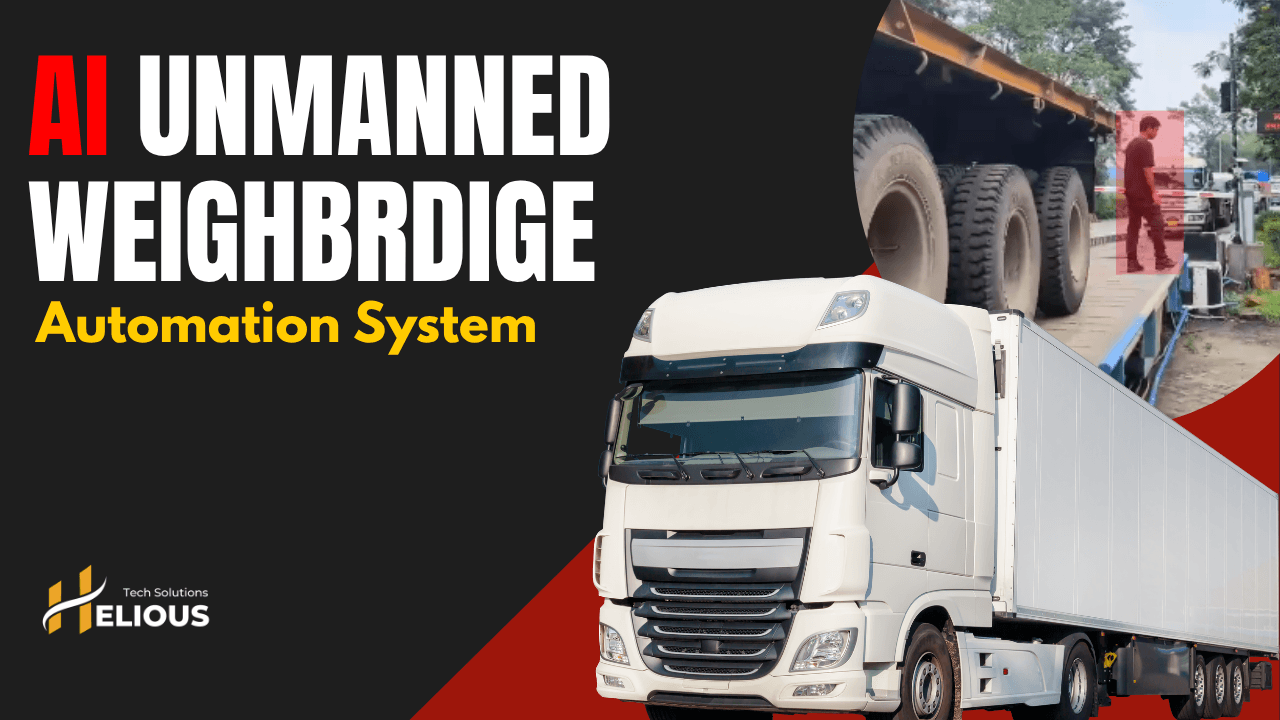
Helious Tech Solutions builds its AI Unmanned Weighbridge Automation System on cameras rather than beam sensors and loop detectors, which reduces the field hardware that typically fails in dusty plant conditions. It runs as a module of TAT Guard, so the weighbridge connects to queue, gate, yard and dispatch instead of operating in isolation. The features below map to the differences discussed above.
- Multi-method vehicle identification — FASTag RFID and ANPR identify the truck automatically, removing manual number entry and the mismatched records it causes.
- Camera-based vehicle positioning — Top-view cameras check that the vehicle is correctly aligned on the platform before weight is captured, addressing partial-loading manipulation.
- Zero-weight validation — The system confirms the platform reads zero before a vehicle enters, so leftover weight or an object on the deck cannot inflate the reading.
- Stability-checked weight capture — Weight is recorded only after AI confirms the reading has stabilised, not when an operator decides to click.
- Driver and human detection — Facial recognition verifies the driver, and human detection flags anyone on the platform during weighment.
- Tamper-proof digital slips with ERP integration — Weighment slips are generated automatically and synced to existing ERP systems, removing re-entry and creating an auditable record.
- Real-time monitoring — Exceptions are escalated to a central view, so supervisors handle problems rather than every routine weighment.
Helious states a weighment cycle of approximately 45 seconds for this system. Actual cycle time at any site depends on platform layout, traffic flow and integration scope.
Also Read: Top 10 Weighbridge Automation Companies in India
Conclusion
Weighbridge software and weighbridge automation solve different problems. Software makes the record tidy. Automation makes the record trustworthy, because each weighment is validated by identification, positioning and stability checks rather than by an operator's judgement.
For plants where weight equals money and truck volumes are high, software alone leaves the most important control in human hands. Upgrading to an automatic weighbridge system is less about modernising a cabin and more about closing that gap.