Every Automated Weighbridge has to answer a question before it captures a weight: is the vehicle properly on the platform?
It sounds like a trivial check. It is not. A truck that stops short, leaving an axle group off the deck, produces a weight that is entirely real and entirely wrong. On an outbound dispatch that understates what leaves the plant. On an inbound receipt, a short tare overstates what arrived. The load cells are working perfectly in both cases. The number is still false.
Positioning is the control that prevents this, and there are two architectures for it. One uses physical sensors embedded in or beside the deck. The other uses cameras. They are usually presented as interchangeable ways to do the same job. They are not, and the difference is worth understanding before you specify either. If you are still working out how an unmanned weighbridge works end to end, this is the layer to start with, because every automated check downstream inherits its assumptions.
What Positioning is Actually Protecting Against
Partial weighing is one of the four mechanisms behind almost all weighbridge-attributable loss, alongside tare manipulation, ghost trips and identity swapping. It is attractive to anyone attempting it precisely because nothing looks wrong. There is no alarm, no exception, no visible anomaly. A slip print. The truck leaves.
It is also the mechanism most likely to happen by accident. A driver stops early because the queue is tight, or because the deck markings have worn away, or because it is 2 a.m. and nobody is watching. Whether the cause is fraud or fatigue, the commercial outcome is the same, and neither shows up in a manual process until a reconciliation weeks later.
So the positioning layer is not a convenience feature. It is a control on the number that becomes an invoice.
How Sensor-based Positioning Works
The sensor approach places physical detectors at the boundaries of the weighing area. In practice that means infrared beam pairs across the approach and exit, inductive loops buried in the road surface, or position sensors embedded in the deck structure itself.
The logic is straightforward. When the entry beam is broken and then restored, and the exit beam is not broken, the system infers the vehicle is between them and therefore on the platform. Loops work on the same principle using metal detection rather than light.
What a Sensor Actually Confirms
Here is the important limitation, and it is architectural rather than a quality issue.
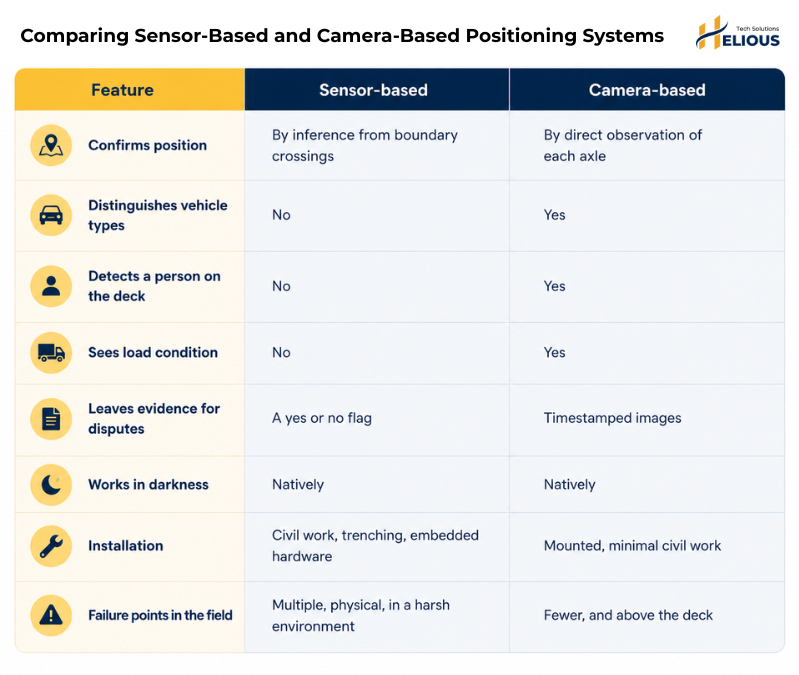
A beam confirms that something crossed a point. That is the whole of the information available to it. It cannot distinguish a truck from a person walking through, a forklift, or a stray sheet of tarpaulin. It cannot tell you whether the vehicle is a rigid truck or a trailer, whether the axle configuration matches what the system expects, or whether the vehicle is centred on the deck rather than skewed across it.
It also cannot tell you anything about condition. A vehicle carrying concealed ballast, a load sheeted differently from the consignment note, or a person standing on the deck during the tare weighing are all invisible to a beam that has correctly registered a break and a restore.
Most importantly, a beam leaves nothing behind. When a weighment is challenged six months later, the sensor's contribution to the record is a boolean. It was in position, or it was not. There is nothing to interrogate and nothing to show a customer, an auditor, or an insurer.
How Camera-Based Positioning Works
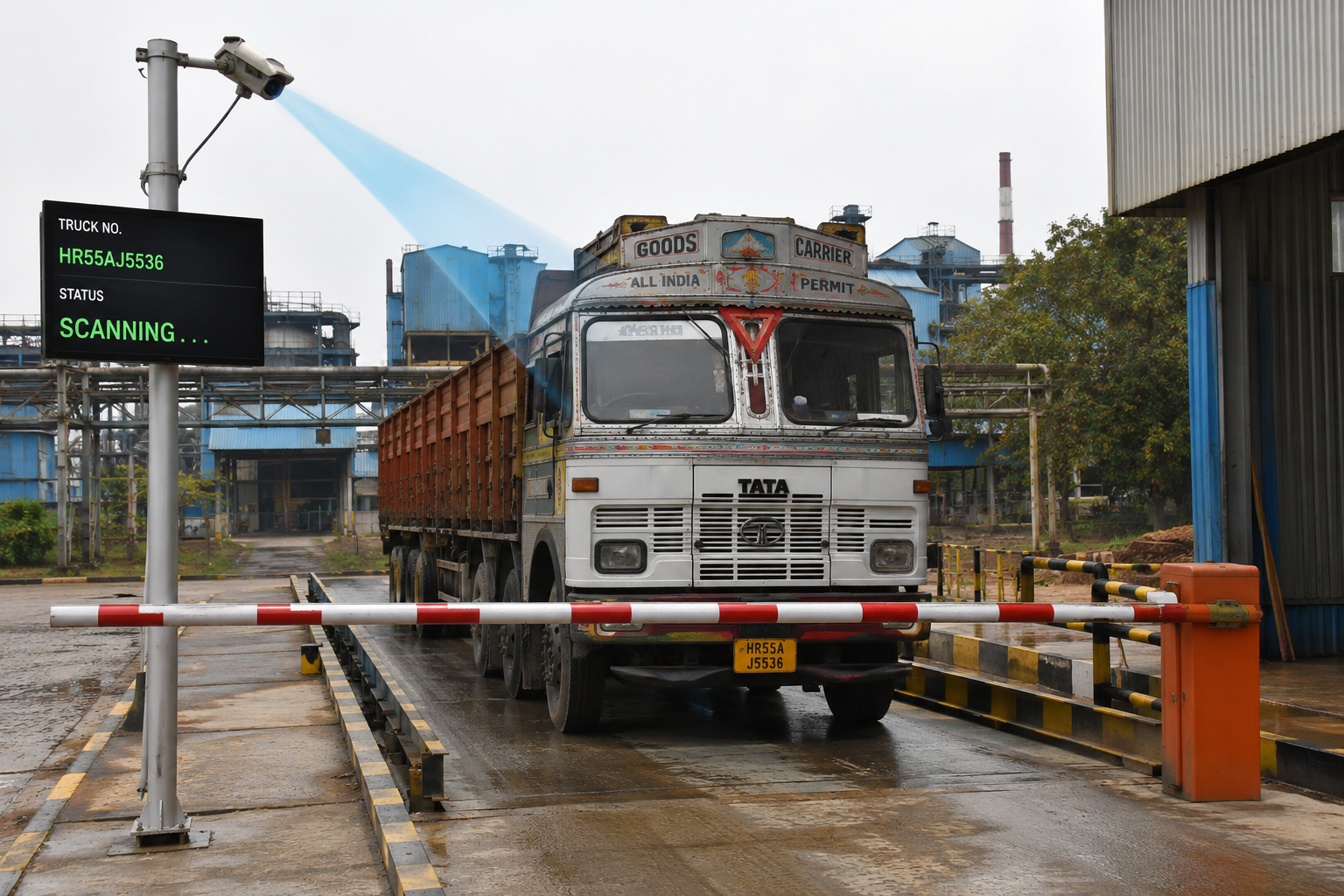
The camera approach places fixed cameras with sightlines along and across the deck, and runs computer vision on the resulting stream. Rather than inferring position from boundary crossings, it observes the vehicle directly.
Tyre tracking is the usual mechanism. The system identifies the wheels, tracks their position relative to the deck edges, and confirms every axle is within the weighing area before releasing the capture. Because the same camera estate is already watching the platform, it can run several other checks on the same frames without additional hardware.
What a Camera Sees
The camera answers the positioning question and then keeps going.
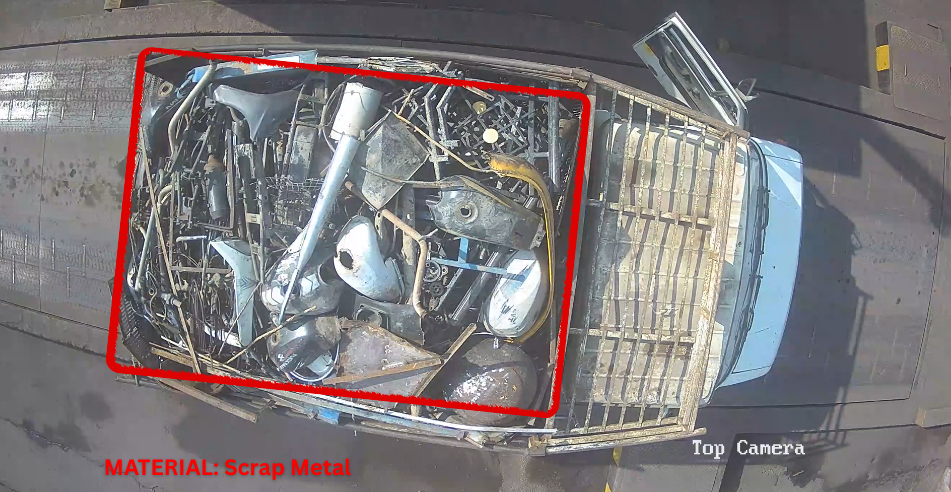
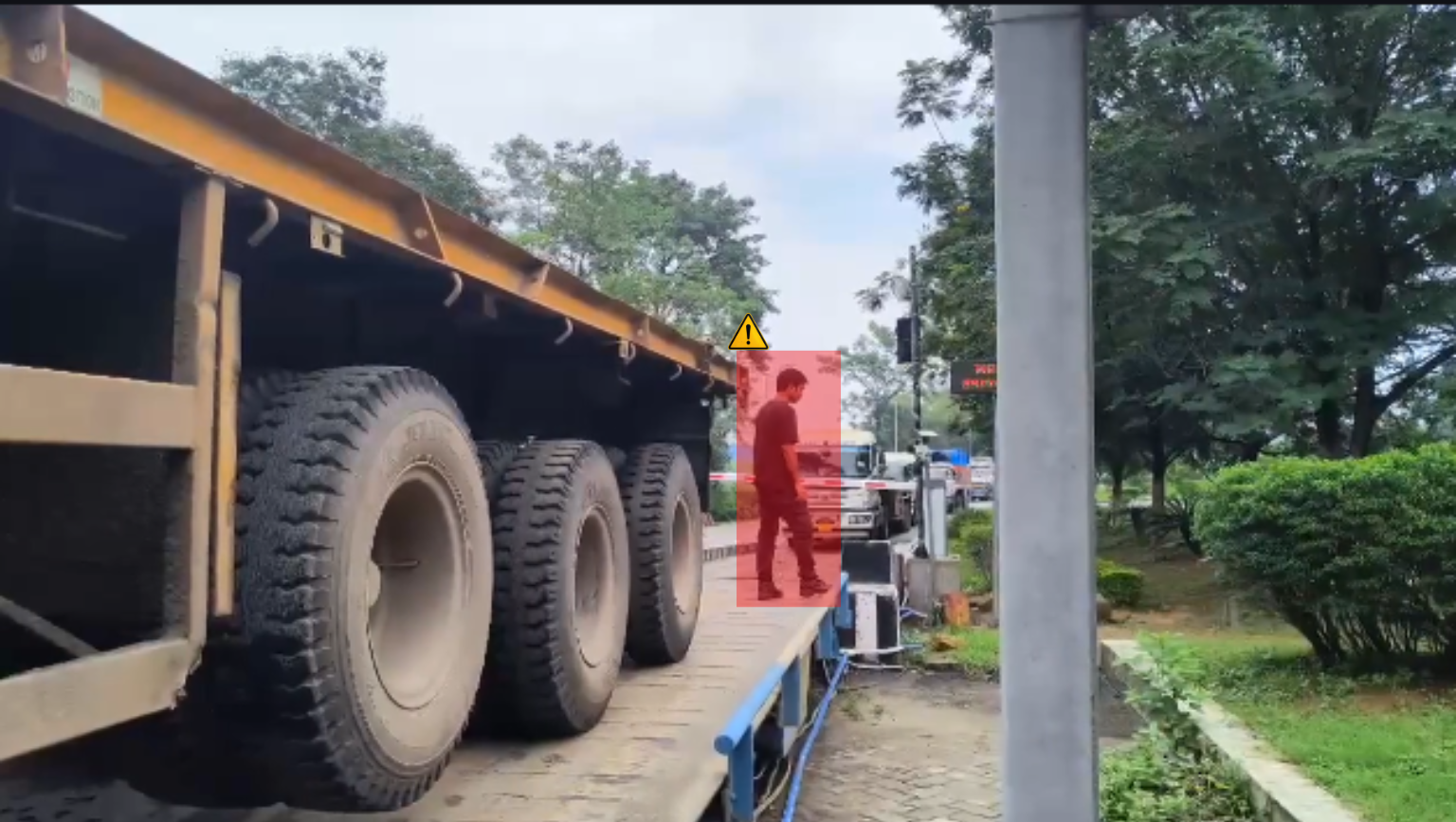
It confirms all axles are on the deck rather than inferring it from two boundary events. It sees whether the vehicle is skewed or centred. It sees whether a person is standing on the platform during the weighing, which is the mechanism behind tare manipulation and which no beam can detect. It sees the condition of the load from above. It sees whether the vehicle in position is the vehicle the system expects, when cross-checked against identification at the gate.
And it leaves a record. Every one of those observations exists as an image attached to the transaction. When a weighment is disputed, the question stops being whose recollection is better and becomes what the images show.
That evidentiary difference matters more than it used to. The weighbridge fraud cases reported through 2026 shared a common feature: in each one, the scale hardware weighed correctly, and the record layer was the target. When the record is what gets attacked, the defence has to be an independent witness to the physical event rather than a better password on the same terminal.
The Cost Nobody Models
Unit price comparisons make sensor-based positioning look inexpensive. The lifetime picture is different, and it is worth asking any vendor about specifically.
Embedded sensors and buried loops live in one of the harshest environments on the site. They sit in a surface that takes repeated heavy axle loads, in the presence of water, dust, ore fines and slurry, through monsoon and through 48-degree summers. They drift, they get damaged, and cabling gets cut during unrelated civil work. Each repair means excavation, and excavation means the bridge is out of service while the queue backs up behind it. It is the specific reason weighbridge automation in India has to be specified against site conditions rather than against a datasheet.
There is also a stamping consideration. A weighbridge in trade use has to be verified and stamped under Section 24 of the Legal Metrology Act, 2009. Work that disturbs the deck structure raises a re-verification question that mounted equipment above the deck does not. This is worth confirming with your Legal Metrology consultant rather than with a vendor, including this one.
How the Helious AI-Unmanned Weighbridge Automation System handles it
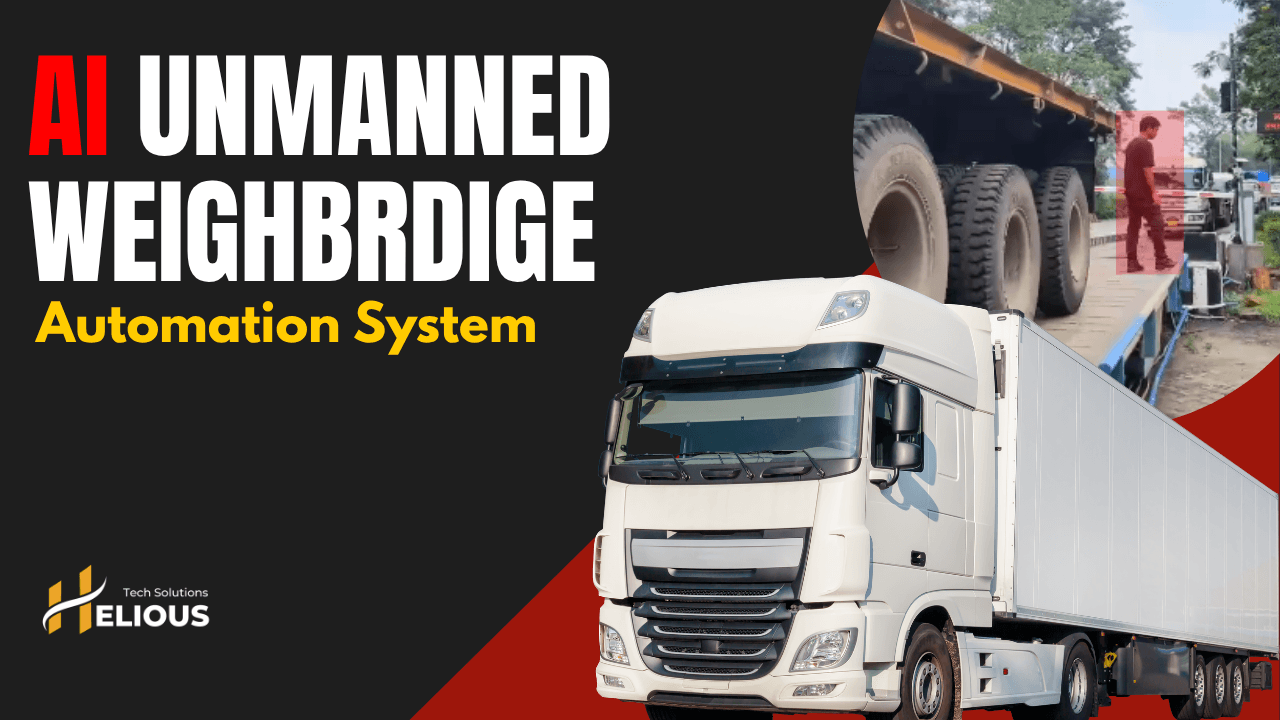
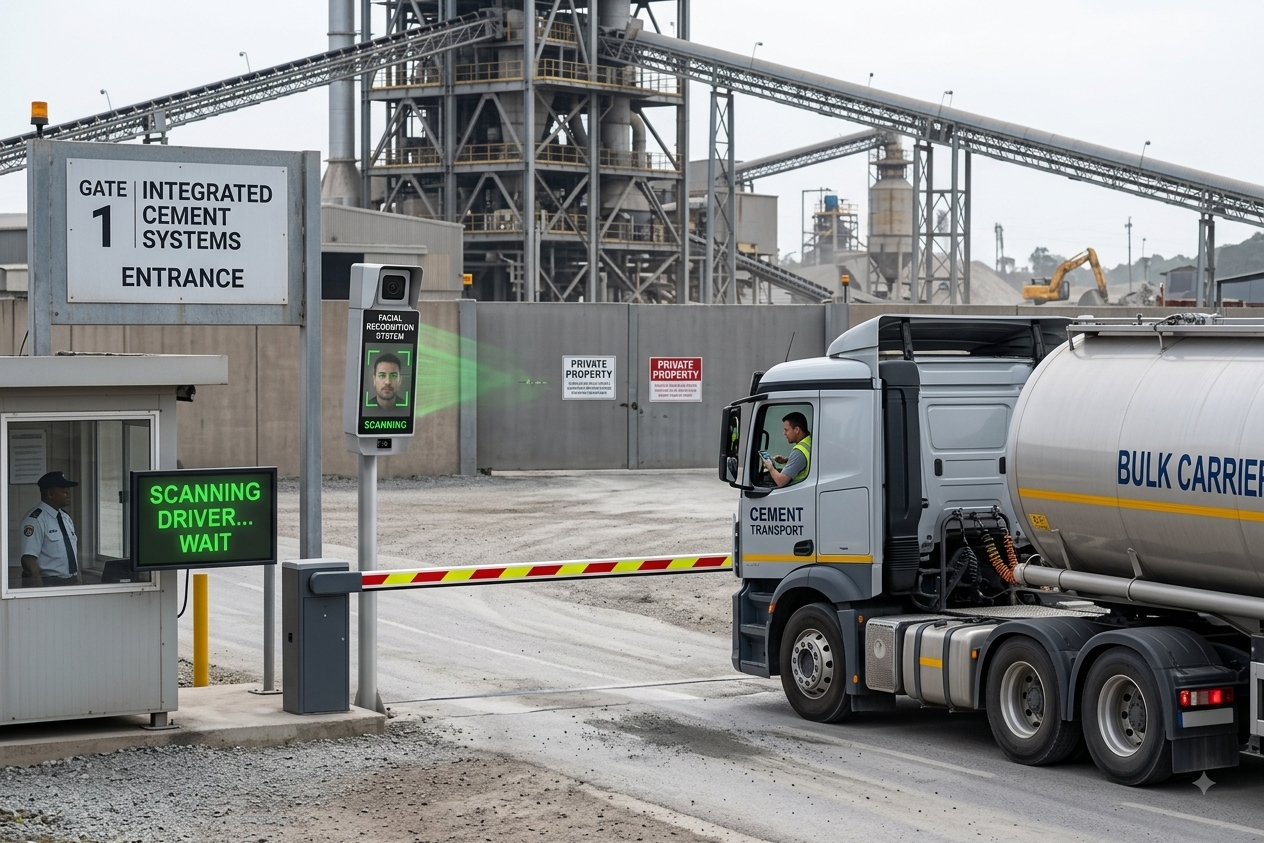
The AI-Unmanned Weighbridge Automation System is the weighbridge module of TAT-Guard, the Helious platform for material movements. Its architecture is camera-native. There are no beam cutters, no loop detectors, and no embedded position sensors in the automation layer. The load cells still perform the physical weighing, exactly as they do on a weighbridge of any architecture, and everything above that layer is vision.
The camera estate at the platform is doing considerably more than confirming position. It runs four groups of checks on the same frames.
1. Confirming this is the right vehicle and the right driver
- Number plate & FASTag verification. Confirms the truck on the deck is the truck the system expects, catching any substitution between the gate and the platform.
- Driver identity verification against DigiLocker. Verifies the person at the wheel against DigiLocker-sourced identity documents, so the driver on the slip is provably the driver on the deck.
2. Confirming nobody is where they should not be
- Platform clear on entry. As the truck enters the weighing area, the system checks that no person is on the platform. This is a safety control before it is a commercial one.
- Nobody on platform during weighment. Someone standing on the platform during a tare weighing is the simplest form of tare manipulation there is.
- Empty platform during weighment. Nothing on the deck other than the vehicle being weighed, because any additional mass is recorded as material. No beam or loop can detect either of these last two conditions.
3. Confirming the weight itself is sound.
- Camera-based tyre tracking. Confirms every axle is within the weighing area before capture, rather than inferring position from two boundary events.
- Automatic zero verification. Runs before every transaction rather than as a periodic calibration check, so a drifted or stale reading cannot carry into a weighment.
- AI weight-stability validation. Confirms the reading has settled before capture rather than accepting the first stable-looking value.
4. Confirming what is actually on the truck
- Top-view load verification. A top-mounted camera captures the loaded material against the consignment record.
- Tarpaulin coverage check. Matters both for compliance on the road and for disputes about condition at the destination.
- Structural inspection. Damage and deformation are recorded as data attached to the movement rather than argued about afterwards.
All of it lands in a tamper-evident transaction record holding the images, timestamps, and identity alongside the weight, so any movement can be reconstructed in an audit long after the fact. The record writes back natively to ERP rather than producing a report someone re-keys.
he module is built to a ~45-second TAT design target at 99.95% uptime, with throughput designed for 15,000+ transactions a day — the kind of volume profile weighbridge automation for a cement plant or an integrated steel works has to absorb, where the gate is moving trucks continuously rather than in shifts. Because the automation layer is mounted rather than embedded, it retrofits onto a working bridge without trenching or deck reconstruction, and it functions on third-party fleets where nothing has been tagged in advance.
On most brownfield sites that is the difference between an unmanned weighbridge system in India being a retrofit and being a rebuild. New vehicle classes arrive as model updates rather than hardware replacement.
The commercial point underneath all of this is the one the comparison above makes. Every check in those four groups runs on the same camera estate that is already confirming position. Specified as separate hardware controls, they would be five or six systems.
Conclusion
Positioning looks like a small technical decision inside a larger procurement. It is not. It determines what your weighbridge can prove.
A sensor tells you a vehicle was between two points. A camera tells you which vehicle, whether every axle was on the deck, whether anyone was standing on it, what the load looked like, and leaves the images to prove all of it. Both answer the positioning question. Only one of them answers the questions that come afterwards, when a customer disputes a consignment or an auditor asks what happened on a Tuesday two years ago.
Specify for the dispute you will have, not just for the barrier interlock you need today. If you are shortlisting for the best weighbridge automation company in India, that is the question worth putting to every vendor on the list, including this one: not what the system detects, but what it can still prove two years later.