Quick Summary
Choosing a weighbridge automation company in India is less about the software demo and more about how the system behaves at 2 a.m. with a muddy truck, a failed RFID read, and a down ERP. This guide covers 12 practical checks across technology, integration, fraud control, support, and total cost of ownership so that you can shortlist vendors on evidence rather than brochures.
Introduction
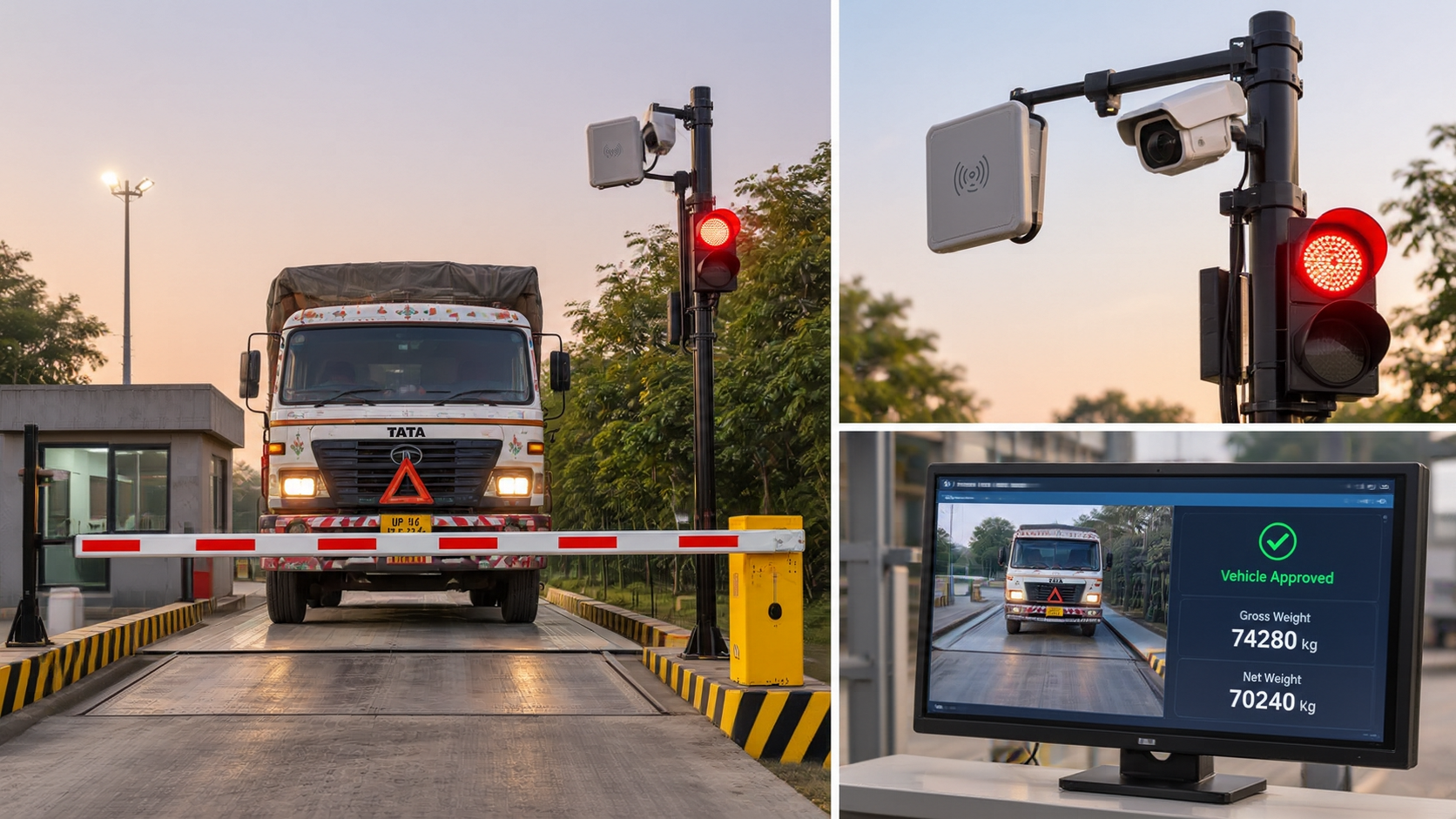
Walk up to the weighbridge cabin at most Indian steel, cement, or coal-handling sites during a shift change and you will see the same scene. A queue of trucks backs up toward the gate. An operator types vehicle numbers from a paper slip, waits for the indicator to settle, prints a ticket and re-enters the same weight into SAP. Somewhere in that loop, a truck gets weighed with one axle off the platform, or a tare weight from last week gets reused.
Most plants that start looking at weighbridge automation already know this. The harder question is who to buy it from. Vendors range from load-cell and indicator manufacturers who have added software, to IT firms who have never stood on a weighbridge platform, to specialist AI and industrial automation companies. Their demos look similar. Their behaviour in a monsoon-season night shift does not.
This article lays out 12 things to check when evaluating a weighbridge automation company in India, based on where these projects usually succeed or stall on the ground.
What an Automatic Weighbridge System Actually Includes
Before comparing vendors, be clear about scope. An automatic weighbridge system is not just software on the operator's PC. It typically has three layers:
- Field hardware: the existing platform, load cells and weight indicator, plus boom barriers, traffic lights, RFID readers or cameras for vehicle identification, positioning sensors or cameras, and often a driver kiosk or display.
- Control and application software: reads the weight directly from the indicator, applies weighing rules, captures images, and controls the barriers.
- Integration layer: exchanges purchase orders, delivery orders, gate entries, and final weights with your ERP and other plant systems.
A vendor strong in only one layer will hand the other two back to you. That is the first filter.
12 Things to Check Before You Choose a Weighbridge Automation Company
Technology and Weighing Integrity
1. How the system identifies vehicles. Ask whether identification uses RFID, ANPR (number plate recognition), or both. RFID is reliable, but tags can be removed and moved between trucks. ANPR avoids tag logistics but struggles with dirty, damaged, or non-standard plates, which are common on Indian highways. A vendor who can combine methods and explain how it handles a mismatch is thinking about real yards.
2. How it prevents partial weighing. A truck with a wheel off the platform gives a wrong weight that still looks valid. Check what detects vehicle position: IR sensors, cameras, or AI-based positioning. Then ask what happens when position is wrong. The barrier should stay closed, and the transaction should not post.
3. Fraud controls beyond the brochure. Common manipulation includes a person standing on the platform during tare, reusing old tare weights, tag swapping, and weighing the same loaded truck twice. Ask the vendor to show, transaction by transaction, how each is detected and what evidence is recorded. Image capture against every weight is a minimum.
4. Weight capture and data integrity. The weight should come directly from the indicator to the software, with no manual entry and no editable fields. Confirm that the weighbridge itself remains verified under India's Legal Metrology requirements, and that automation does not change the indicator in a way that affects that verification.
Integration and Operations
5. ERP integration, both directions. Good weighbridge automation pulls order and gate data from SAP, Oracle, or your in-house ERP, and pushes final weights back without re-keying. Ask what happens when the ERP connection drops. The system should buffer transactions locally and sync later, not stop the gate.
6. Fit with your existing hardware. Many plants want to retrofit rather than replace a working platform. Check whether the vendor supports your indicator make and communication protocol, and whether they will survey the site before quoting.
7. The unmanned workflow and its exceptions. An unmanned weighbridge still needs a plan for failures: an unreadable plate, an order not found, a tag not recognised. Ask how the driver is guided, who gets alerted, and how a remote supervisor approves or rejects an exception with an audit trail.
8. Behaviour in actual site conditions. Dust at cement plants, heat in Rajasthan and Odisha, monsoon rain, poor night lighting, and unstable power all affect cameras and readers. Ask about enclosure ratings, lighting, cleaning requirements, and UPS backup. Then ask to see a site running in similar conditions.
Scale, Support and Cost
9. Scalability across weighbridges and plants. If you run several weighbridges or plants, check whether the platform manages them centrally, with common rules and consolidated reports, or whether each site becomes a separate installation.
10. Reporting and truck turnaround visibility. Weight tickets are not enough. Useful systems show queue time, weighing time, and gate-to-gate truck turnaround time, so operations can see where trucks actually wait.
11. Implementation method and references. Ask for a written plan covering site survey, pilot, parallel run, operator training, and go-live. Ask for references in your industry and, where possible, visit a live installation rather than relying on a video.
12. Support, AMC, and total cost of ownership. A weighbridge that stops can stop dispatch. Check service response times, availability of local engineers, spare parts for cameras and readers, remote diagnostics, and annual maintenance costs. Compare total cost over several years, not just the purchase order.
Is There a "Best" Weighbridge Automation Company in India?
People often search for the best weighbridge automation company in India, but the honest answer depends on your site. A single-weighbridge stone crusher and a multi-gate integrated steel plant need very different things. The better question is which vendor fits your vehicle mix, ERP, site conditions, and support expectations.
A few red flags apply everywhere:
- Claims of 100% accuracy or zero fraud without explaining how exceptions are handled.
- No site survey before the quotation.
- ERP integration described as "possible" rather than shown working.
- No live reference site you can visit or speak to.
- Support that depends on one engineer in another state.
How Helious AI Unmanned Weighbridge Automation Addresses These Checks
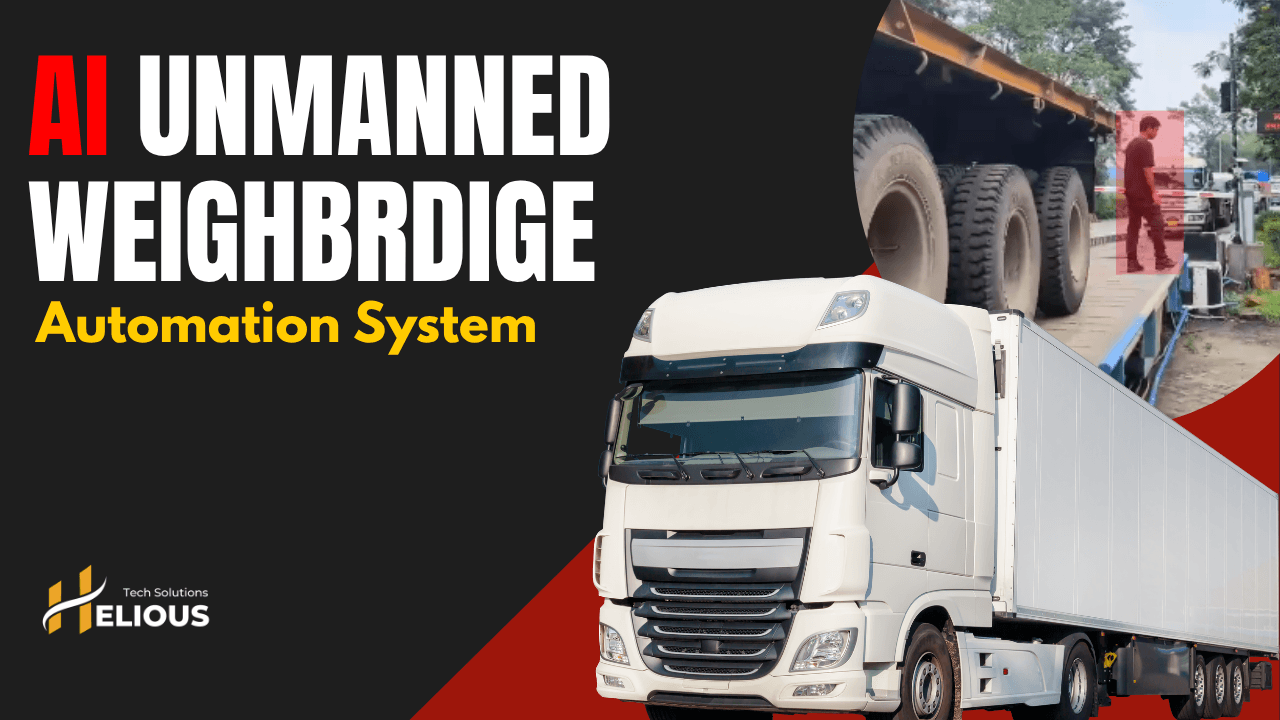
The Helious AI Unmanned Weighbridge Automation System is a module of TAT Guard, which covers the truck’s journey from gate entry to dispatch. It can also be deployed as a standalone weighbridge solution.
Its key features map directly to the checks above:
- FASTag and ANPR cross-check: the tag and number plate must match the same vehicle and an open ERP order, so swapped tags are rejected.
- Vehicle presence check: computer vision confirms a real truck is at the barrier, so a tag held in a hand or another vehicle fails.
- Zero-weight validation: the platform must return to zero before each entry; otherwise the lane locks and the supervisor is alerted.
- No person on the platform: deck cameras block weighment if anyone is standing on the weighbridge.
- Driver face recognition: the driver is matched to the consignment, and the licence is verified through DigiLocker.
- Camera-based positioning: AI confirms every axle is on the platform, with no loop coils or photocells to maintain.
- Top-view material check: an overhead camera checks the load against the order and confirms it is covered.
- ERP integration with offline queuing: weighment data posts existing ERPs automatically and is queued locally if the network drops.
For plants where weighbridge delays are part of a larger congestion problem, TAT Guard extends visibility to truck turnaround time across the gate, weighbridge, and loading points, and supports tag-based vehicle tracking where that fits the site.
Conclusion
The right weighbridge automation company in India is the one whose system keeps weighing honest and trucks moving when conditions are not ideal. Feature lists will look alike. The differences show up in how a vendor handles failed identification, partial weighing, ERP outages, dust and night shifts, and how quickly they respond when something breaks.
Use the 12 checks as a scoring sheet. Insist on a site survey, a live reference, and a written exception-handling plan before you sign. A vendor who welcomes those questions is usually the one worth shortlisting.