Quick Summary
A PPE detection system uses cameras and computer vision to flag workers missing helmets, vests, or safety gear. But detection accuracy varies sharply by PPE type, camera angle, and plant conditions. This article explains what PPE detection AI reliably catches, where it fails, and how to deploy it so it reduces incidents instead of generating ignored alerts.
Introduction

Most plants already have a PPE policy. What they don't have is any reliable way to know whether it's being followed at 2:40 AM in the raw material yard.
Safety officers do rounds. Supervisors correct what they see. Gate guards check what's convenient to check. Everything else is unobserved, and the first hard evidence of a compliance gap usually arrives as an incident report. That's the operational problem a PPE detection system is meant to solve — not to replace safety culture, but to give it continuous visibility instead of sampled visibility.
The mistake is treating PPE detection as a solved problem you simply buy. Vision models behave very differently on a helmet than on a pair of gloves, and very differently in a clean assembly hall than in a cement packing plant with airborne dust. Knowing the difference before procurement is what separates a working deployment from a dashboard nobody opens.
How PPE Detection AI Actually Works
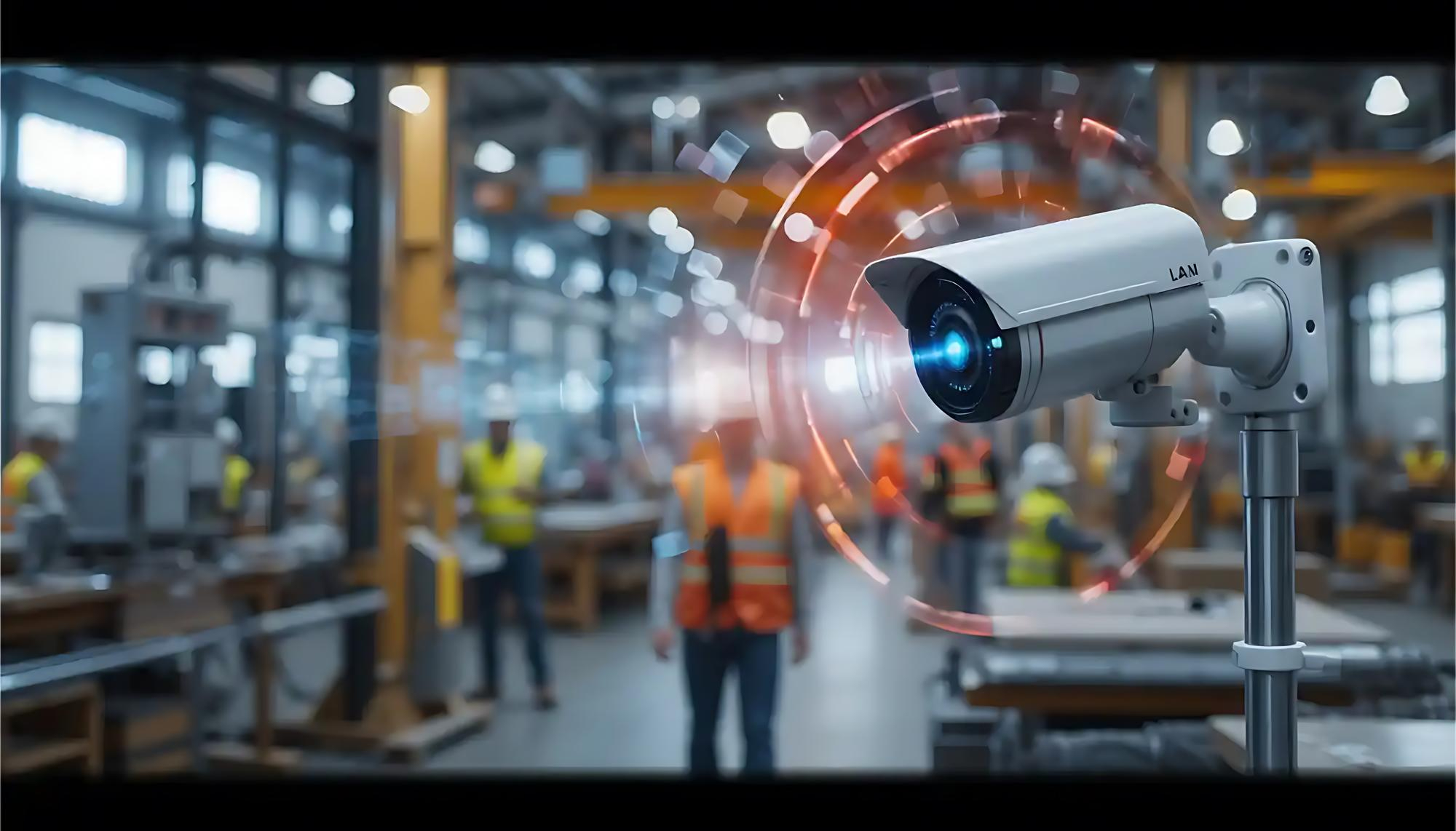
The system runs object detection on video frames from fixed cameras. Two architectures are common.
The first detects PPE items directly — a model trained to find "helmet," "safety vest," "safety shoes" as object classes in the frame. The second detects the person first, estimates body keypoints (head, torso, hands, feet), then checks whether the expected PPE appears in the correct region relative to those keypoints.
The second approach is more robust, and the reason matters operationally. A direct-detection model can see a helmet lying on a control panel and register compliance. A keypoint-anchored model asks a narrower question: is there a helmet on this person's head? For any serious deployment involving person monitoring, spatial association between the worker and the gear is not optional.
Inference typically runs on edge hardware near the camera, with only events and clips sent upstream. This keeps bandwidth manageable and avoids the latency problem you get when a 40-camera plant streams everything to a central server.
What Works Reliably
Some detections are genuinely dependable in production conditions:
- Helmets and hard hats. Large, high-contrast, worn in a predictable position on a predictable body part. This is the strongest class in almost every deployment.
- High-visibility vests. Designed to be visually distinctive. Detection performance is usually strong, though colour variation across contractors can require retraining.
- Full-body coverall presence. Coarse but workable where the plant mandates it.
- Zone-based rules. "Helmet required inside this polygon" is easy to configure and easy for models to enforce because the question is binary.
- Head-count and presence logic. Counting people in a restricted area, detecting loitering, flagging entry into an exclusion zone during crane movement.
The common factor: the object is large in the frame, worn in a consistent location, and visually distinct from the background.
What Fails — and Why
This is the section most vendors skip.
Small PPE items
Gloves, safety glasses, earplugs, and face shields are small. At a camera distance of 8–10 metres with a standard lens, a glove may occupy a handful of pixels. Below roughly 20–30 pixels on target, detection becomes unreliable regardless of model quality. Earplugs are effectively undetectable at plant-floor distances.
Correct wearing versus mere presence
A helmet worn with the chinstrap unfastened looks like a worn helmet. Safety glasses pushed up onto the forehead frequently read as compliant. Respirators worn below the nose are a known weak spot. A detection model answers "is it there," not "is it protecting anything."
Occlusion and body orientation
A worker facing away, partially hidden behind a machine, or overlapping with another person creates ambiguity. Vests are missed when the worker's back is to the camera, and the reflective strips are in shadow. Dense crowding at shift change degrades accuracy sharply.
Environmental conditions
Cement dust, welding arc glare, steam near quench zones, heavy backlight at shed openings, and rain at outdoor weighbridges all degrade image quality. Night operation without proper IR or supplementary lighting produces high false-negative rates.
Class and context confusion
Bump caps read as hard hats. Orange contractor uniforms read as hi-vis vests. A visitor in a bright jacket may be counted compliant when they're wearing no rated PPE at all.
Alert fatigue
The most common failure mode isn't technical. A system tuned too sensitively produces hundreds of daily alerts; the safety team stops reviewing them within two weeks, and the deployment quietly dies. Threshold tuning and alert routing determine whether the system survives.
Where PPE Detection Belongs in the Workflow
Detection alone changes nothing. What changes behaviour is placing the check at a point where something can actually be stopped.
The strongest control point is the entry. Integrating PPE verification into an access management system at plant gates, shop-floor turnstiles, and restricted-zone doors turns a passive alert into a hard interlock — no helmet, no boom barrier release. This is also where gate access control and PPE enforcement genuinely converge: the same camera stack that reads a face, a card, or a vehicle number can verify gear before granting entry.
The second control point is the visitor and contractor path. Regular employees learn the rules; visitors and first-day contractors are the highest-risk population and the least trained. Connecting PPE checks to a visitor management system means a visitor's pass activation depends on issued and worn PPE, and the record is auditable afterwards.
Inside the plant, continuous smart monitoring works best for trend data rather than real-time correction. Which shift, which zone, which contractor, which time of day. That data drives toolbox talks and supervisor accountability far more effectively than individual violation alerts.
Deployment Considerations That Decide the Outcome
- Camera placement before model selection. Mount height 3–4 metres, downward angle around 15–30 degrees, worker face-on where possible. A well-placed 2MP camera outperforms a badly placed 8MP one.
- Define pixels-on-target per PPE class. Decide the detection distance for each item. If gloves are in scope, you need dedicated close-range cameras at the task location, not wide-area coverage.
- Scope realistically in phase one. Helmet and vest at entry points and two high-risk zones. Expand only after the alert workflow is proven.
- Plan for site-specific retraining. Stock models underperform on your uniform colours, lighting, and layout. Budget for an annotated sample from your own cameras.
- Route alerts to someone with authority to act. A supervisor's mobile beats a control-room screen nobody watches.
- Settle privacy and IR policy early. Decide upfront whether the system identifies individuals or reports anonymised violations, and align with your works committee.
- Measure false positives weekly for the first quarter. Tuning is an ongoing activity, not a commissioning task.
How Helious Secure Sight Handles PPE Detection on the Plant Floor
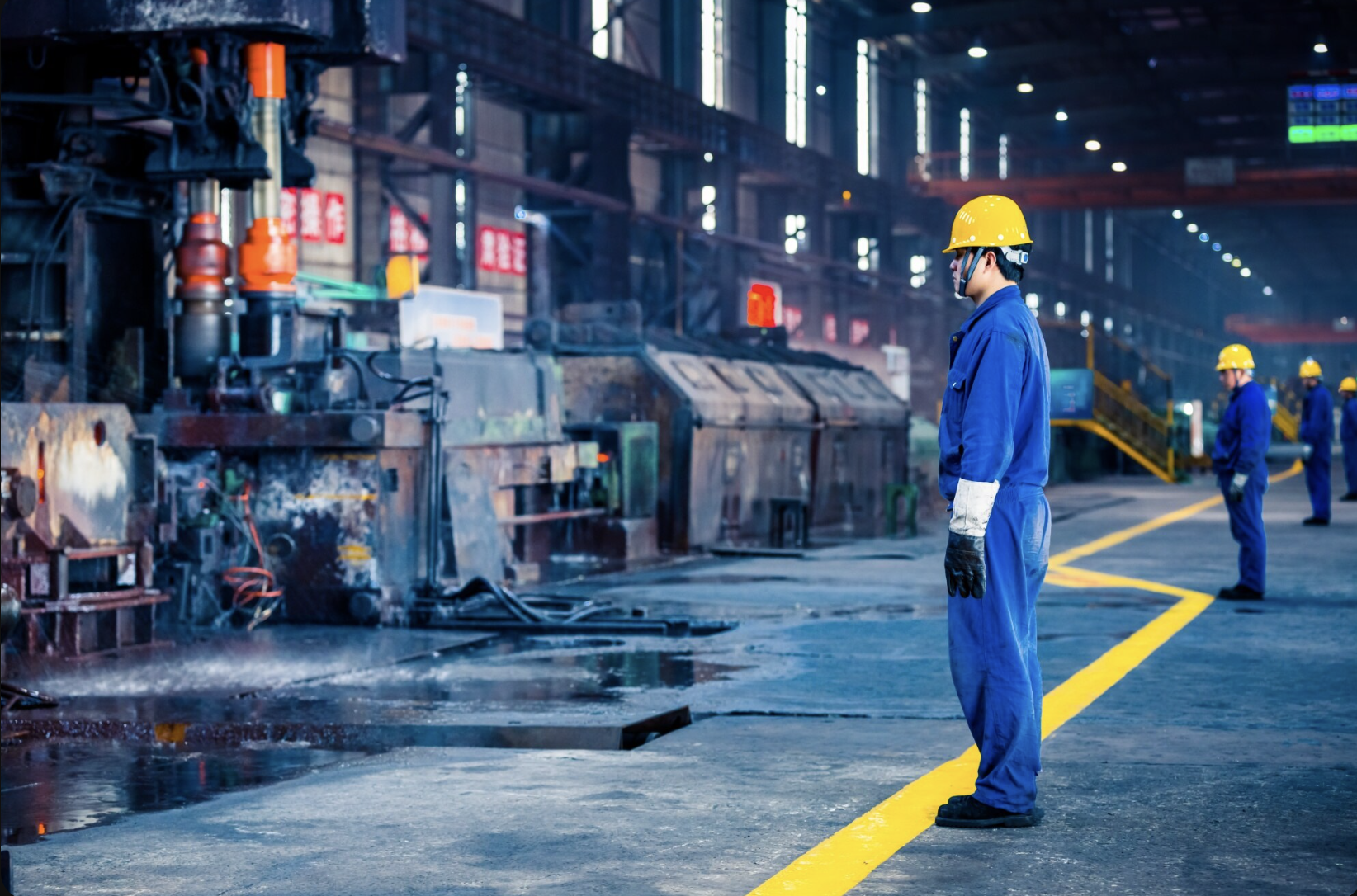
Helious Tech Solutions approaches PPE detection as an enforcement and analytics layer tied into plant access and operations, not as a standalone camera feature. The relevant capabilities:
- Person-anchored PPE detection — PPE is validated against detected body keypoints, so gear must be worn on the correct body region rather than merely visible in frame.
- Zone-based rule configuration — Different PPE requirements per area, shift, and role, so a packing hall and a hot metal zone don't share one blanket rule.
- Gate and turnstile interlock — PPE verification integrated with gate access control so entry is granted only on compliance, with barrier and turnstile control.
- Contractor and visitor compliance tracking — PPE status linked to the visitor management system record, creating an auditable entry trail for every non-employee.
- Edge inference with event-based upload — Processing near the camera to keep bandwidth and latency low across multi-camera sites.
- Violation analytics and trend reporting — Zone, shift, and contractor-level dashboards for person monitoring patterns instead of raw alert volume.
- Integration with existing VMS, SCADA, and ERP — Events pushed into the systems your safety and operations teams already use.
Where the same camera infrastructure supports vehicle and material movement, these capabilities extend naturally into Helious solutions for AI unmanned weighbridge automation and Smart Store - smart material tracking, letting one deployment serve both safety and throughput objectives.
Conclusion
PPE detection AI is reliable for helmets, vests, and zone-based rules, and unreliable for gloves, eyewear, and correct-wearing verification. Deploy it where those strengths apply — at entry points where non-compliance can be blocked, and across zones where trend data drives supervisor accountability. Treat sub-30-pixel PPE items as out of scope until you add dedicated close-range cameras.
The deployments that fail aren't the ones with weaker models. They're the ones that promised full-body compliance detection across the whole plant on day one, flooded the safety team with alerts, and lost credibility before tuning ever started.
If you're evaluating a PPE detection system or planning to integrate PPE checks into your existing access management system, contact us for a site-specific assessment of camera coverage, detectable PPE classes, and realistic phase-one scope.