Quick Summary
Heat-number mix-ups happen when a billet or rebar bundle loses the link to the heat it was cast from. This article explains where that link usually breaks between caster and dispatch, how an AI billet tracking system uses computer vision to read and verify billet identity, where cameras cannot help, and how heat identity carries through to rebar bundles.
Introduction
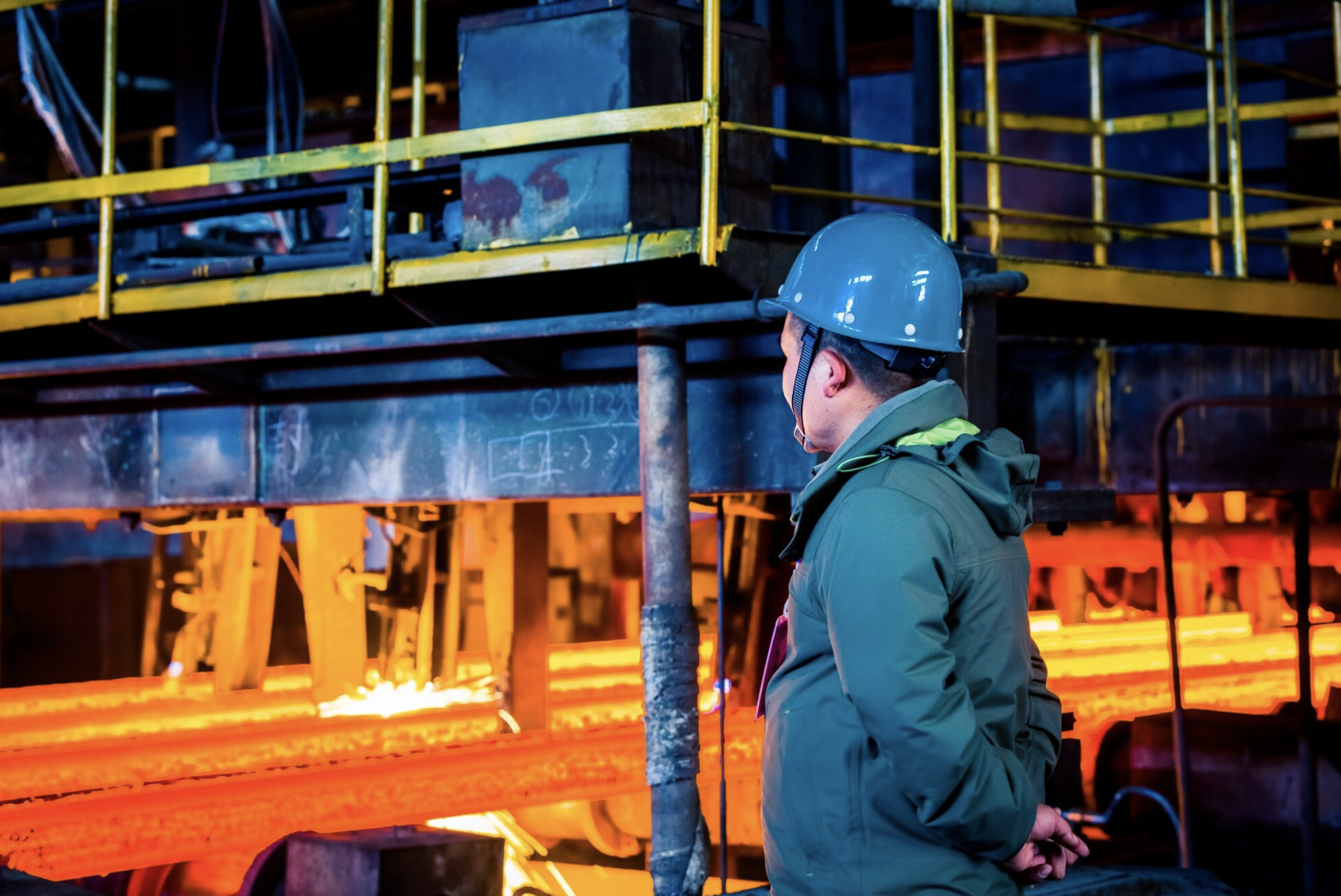
A customer's site engineer calls the plant with a simple question: the mill test certificate shows one heat number, but the tag on the rebar bundle shows another. Which one is right?
Answering it usually takes hours of shift logs, crane records and calls to the melt shop, and sometimes nobody can say for certain.
Heat-number traceability looks like a paperwork problem, but it is a material-handling problem. Every heat carries its own chemistry and test results. When billets from two heats are stacked together, charged out of order, or rolled across a heat changeover without a clean boundary, the paperwork stays neat while the steel drifts away from it.
That is why steel plants are looking at a billet tracking system built on computer vision rather than manual entries alone. The idea is to read the billet's identity wherever it physically moves, instead of relying on someone to write it down. The execution is harder, and that gap is what this article covers.
Where Heat-Number Mix-Ups Actually Happen
Most mix-ups happen at routine handoffs, not in dramatic failures.
- At the caster and cooling bed. A multi-strand caster produces one heat across several strands at once. If marking is manual, or the marker skips a billet, the first gap appears before it leaves the bay.
- In the billet yard. Cold billets are stacked by heat until yard space runs out. Then partial heats share stacks, and a crane operator can easily lift from the wrong one.
- At the furnace charging. The charging sequence decides which heat enters the mill first. If two heats are charged interleaved and nobody records it, the mill cannot separate them later.
- At heat changeover in the mill. Rolling is continuous, so consecutive heats pass through back to back, and bundles formed at that boundary are the usual source of mixed-heat bundles.
- At tagging and dispatch. A tag printed against the wrong heat, or a bundle loaded from the wrong lot, breaks traceability at the very last step.
The result is the same in each case: the test certificate describes one heat while the customer receives steel from another. That can mean rejected consignments and re-testing.
How a Computer Vision Billet Tracking System Works
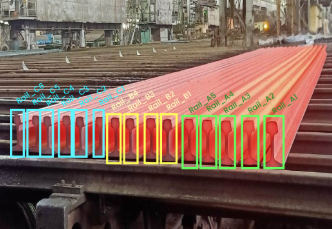
An AI billet tracking system places cameras where billets change hands and turns each pass into a verified event: which billet, which heat, where and when.
Reading the Billet Identity
Billets are usually identified by a heat number and a sequence number that are painted, stamped or tagged on the end face or side. Cameras with controlled lighting capture that marking, and optical character recognition (OCR) models read it.
Stamped characters on a hot, scaled billet look nothing like clean printed text. Models need training on real images from the plant's own marking method, under its own lighting, rather than generic OCR.
Counting and Verifying at Checkpoints
Vision models also count billets as they cross a roller table or leave the cooling bed. If the yard sees fewer billets from a heat than the caster reported, that exception is resolved before the steel moves further.
Typical checkpoints are:
- Caster run-out or cooling bed exit: the first read, linking each billet to its heat.
- Billet yard entry and crane pick: records which stack a billet sits in and when it leaves.
- Furnace charging table: captures the exact charging sequence by heat.
- Furnace discharge: confirms the count leaving the furnace.
- Bundling and dispatch: links finished bundles back to their heat.
Any read that fails, or does not match the expected heat, becomes an alert instead of a silent assumption.
What Computer Vision Cannot See
This is where many billet tracking proposals oversell. Computer vision is strong at checkpoints and blind between some of them.
Inside the reheating furnace, markings degrade under heat and scale, and no camera can identify individual billets. Tracking depends on sequence logic: billets generally leave in charging order, so a verified charging sequence plus a discharge count keeps the heat boundary intact.
In the rolling mill, the billet stops existing as a billet. Identity travels as a count and a timestamp, adjusted for cobbles, crop ends and rejected billets. One unrecorded cobble shifts the heat assignment of every bundle after it.
Cameras also cannot:
- Correct a wrong marking. If the heat number was painted incorrectly at the caster, the camera will read the wrong number accurately.
- Verify chemistry or mechanical properties. That remains the laboratory's job.
- Read markings fully covered by scale, dirt or smeared paint. These must be flagged for manual checking, not guessed.
Vision provides the anchor points, and tracking logic carries identity between them. A system that does only one of the two will leak.
Carrying Heat Identity From Billet to Rebar Bundle

Rebar tracking is where traceability is finally tested, because the bundle is what the customer receives. One billet becomes many bars, and bars from one billet can end up in more than one bundle.
A workable approach links each bundle to the heat of the billets rolled during its time window. Bundles formed across a heat changeover are flagged as transition bundles for the quality team to decide on, rather than leaving under one heat number by default.
At bundling, cameras can confirm the tag is present and readable, read its barcode or QR code, and in some setups count bars from the bundle's end face. At dispatch, bundles are matched against the delivery order, closing the loop from heat to truck.
Implementation Realities Plants Should Plan For
Plant conditions decide whether a billet tracking system works, more than the model architecture does.
- Marking discipline comes first. If marking at the caster is inconsistent, fix that before expecting reliable reads downstream. Machine stamping or automated marking gives cameras far more consistent characters than hand-painted numbers.
- Camera placement and protection. Hot billets glow, steam and dust drift across roller tables, and lighting changes between shifts. Enclosures, cooling, lens angles and controlled lighting matter as much as the software.
- Integration with existing systems. Heat data usually lives in the melt shop's Level 2 system or MES, and dispatch data lives in ERP. Tracking only pays off if heat numbers flow from caster records to bundle tags and dispatch documents without re-typing.
- Exception ownership. Decide in advance who acts on a failed read or a count mismatch, and how quickly. An alert that nobody owns is just another log entry.
Start with one route, prove read rates under real conditions, then extend to bundling and dispatch.
How Helious Billet & Rebar Tracking Handles These Challenges
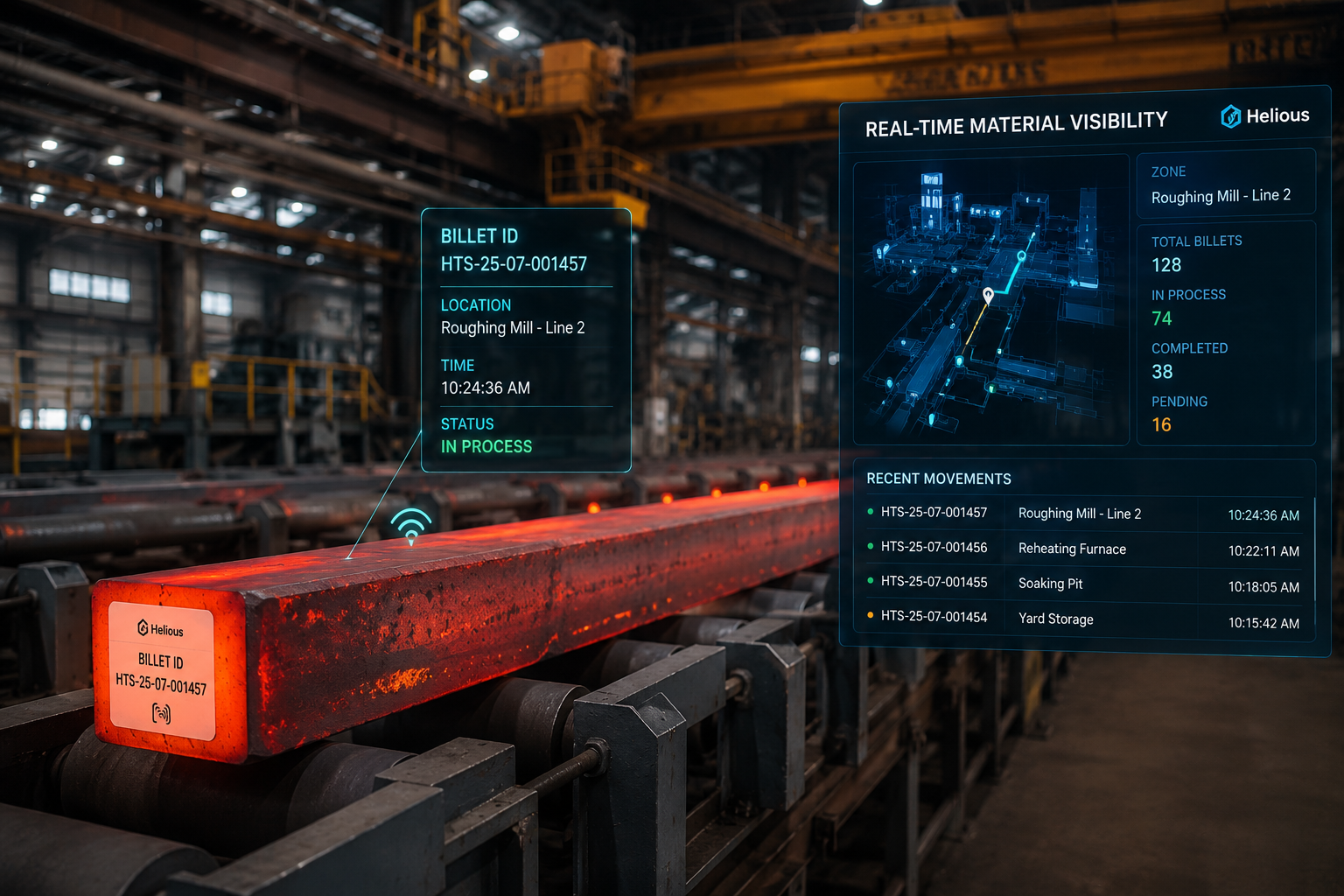
The Helious Material Tracking System is the computer vision module of Smart Store, the Helious warehouse management system. It gives every billet a serial-level identity tied to its heat. The features most relevant to heat-number mix-ups are:
- Ultra-Accurate Identification: reads stamped, engraved or laser-etched serial numbers on billets, including hot, scaled surfaces with partial marks, replacing manual stencil reading at the checkpoints where mix-ups start.
- Intelligent Multi-Camera System: synchronised cameras with active illumination view each billet from more than one angle, so glare, steam or a hidden face on one camera does not end the read.
- Advanced Geometric Analysis: measures side size, bulging and skewness in the same camera pass, flagging dimensional irregularities alongside identity.
- AI-Powered Adaptive Intelligence: neural-network models use context to recognise difficult characters and improve as they learn from the plant's own images.
- Caster-to-bundle traceability: links heat number to billet number at the caster and carries it through to the finished TMT bundle, with heat number, cast sequence, dimensional data and test certificate reference attached.
Conclusion
Heat-number mix-ups rarely come from one big failure. They come from small handoffs where identity is assumed: a shared stack, an unrecorded charging order, a bundle formed across a heat changeover.
An AI billet tracking system removes most of that guesswork by reading and counting billets wherever they change hands. It cannot see inside the furnace or fix a wrong marking, so it must work alongside sequence tracking and disciplined marking. With those pieces in place, the test certificate matches the steel in the bundle.